

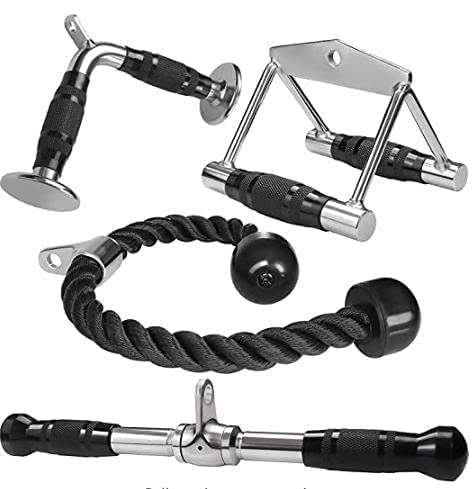
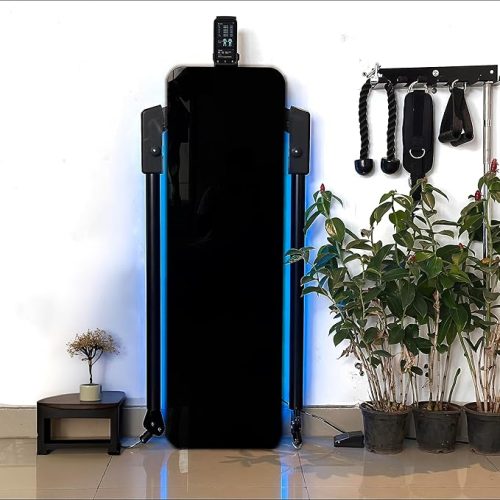
Weight Lifting Equipment Lat pulldown is exercise that helps the muscle ,tricep pull down rope can be adapted for those with special requirement
Fitrxx Combo Tricep Rope/Tricep Pull Down Rope and V Bar Cable Attachment – Cable Bar for Strength Training (Rowing Handle, V-Shaped Bar, Triceps Rope, Straight Rotating Bar
Original price was: ₹1,559.00.₹1,449.00Current price is: ₹1,449.00.
Description
Product information
Weight lifting equipment
When it comes to Weight Lifting Equipment designing an efficient and results-driven workout routine, choosing the right weight lifting equipment is as important as discipline and consistency. Among the numerous tools available, the tricep pull down rope and V-bar stand out as essential attachments that offer versatility, targeted muscle engagement, and a deeper range of motion. Whether you’re a beginner or an experienced fitness enthusiast, incorporating these accessories into your workout can significantly enhance your triceps, back, and core strength while providing functional benefits for overall athletic performance.
Expert Tips for Maximizing Results with Tricep Pull Down Rope and V-Bar
1.Mind-Muscle Connection: Focus mentally on the muscle group being worked. This technique enhances contraction and promotes hypertrophy.
2.Use Progressive Overload: Gradually increase weight or repetitions each week to continuously challenge muscles and stimulate growth.
3.Incorporate Supersets: Pair exercises like tricep pushdowns with pulldowns for efficient, high-intensity workouts.
4.Track Your Progress: Use a training journal or app to record weights, reps, and notes on form improvement.
5.Prioritize Recovery: Incorporate sleep, hydration, and proper nutrition to support muscle repair and growth.
Why Invest in Quality Weight Lifting Equipment?
Investing in high-quality weight lifting equipment ensures safety, durability, and effectiveness during training sessions. Attachments like the tricep pull down rope and V-bar not only offer specific movement patterns but also provide ergonomic designs that reduce strain on joints while maximizing muscle activation. When selecting weight lifting tools, opting for durable materials such as high-strength nylon ropes, stainless steel cables, and powder-coated handles ensures long-lasting performance under rigorous use.
⸻
Tricep Pull Down Rope: A Must-Have for Focused Arm Training
The tricep pull down rope is an incredibly versatile accessory that complements exercises such as cable pushdowns, overhead extensions, and rope face pulls. It targets the triceps brachii, helping to sculpt the arms while improving strength and stability.
Benefits of Using a Tricep Pull Down Rope
✔ Enhanced Muscle Engagement – The rope’s adjustable ends allow users to spread their hands apart at the bottom of the movement, increasing the activation of the lateral and long heads of the triceps.
✔ Better Range of Motion – Unlike rigid bars, the rope attachment encourages a fuller extension and contraction, improving muscle fiber recruitment.
✔ Reduced Wrist and Joint Strain – The flexible design allows your wrists to move naturally, lowering the risk of overuse injuries during repetitive exercises.
✔ Core Activation – Many rope exercises also engage your stabilizing muscles, including the core, shoulders, and forearms, offering a comprehensive workout.
How to Use the Tricep Pull Down Rope Effectively Weight Lifting Equipment
1.Attach the rope securely to a high pulley machine.
2.Grip the rope handles with a neutral grip, palms facing each other.
3.Keep your elbows tucked in as you push the rope down until your arms are fully extended.
4.Slowly return to the starting position, keeping tension on the muscles throughout the movement.
For best results, combine it with other weight lifting equipment like dumbbells and barbells to build a well-rounded upper body strength program.Weight Lifting Equipment
For Rehabilitation and Injury Prevention
These attachments can be used in controlled rehabilitation programs to strengthen muscles without overloading joints.
•Focus on low weights and high repetitions.
•Prioritize correct form over resistance.
•Combine exercises with mobility work and stretching.
Example Routine:
•Rope Face Pull – 3 sets of 15–20 reps
•Overhead Rope Extension – 2–3 sets of 12 reps
•Seated Row – 3 sets of 10–15 reps
⸻
Common Mistakes to Avoid When Using Weight Lifting Equipment
Even with the best tools, improper usage can lead to ineffective workouts or injuries. Here are some common errors and how to fix them:
Mistake 1: Using Excessive Weight
Lifting beyond your current strength compromises form and reduces muscle activation.
Fix: Start with lighter weights and progressively increase resistance while focusing on muscle contraction.
⸻
Mistake 2: Relying on Momentum
Swinging the body during cable exercises reduces effectiveness and increases injury risk.
Fix: Stabilize your core, engage muscles deliberately, and control the movement throughout.
⸻
Mistake 3: Ignoring Grip Strength
Weak grip strength can limit performance in exercises using the V-bar or rope.
Fix: Incorporate grip-specific exercises such as farmer’s carries or wrist curls to strengthen the hands and forearms.
⸻
Mistake 4: Skipping Warm-up and Stretching
Failing to prepare muscles can lead to stiffness and injuries.
Fix: Perform 5–10 minutes of light cardio and dynamic stretching before using the attachments.
⸻
Mistake 5: Poor Posture
Rounded shoulders, forward head posture, or improper alignment can result in long-term pain Weight Lifting Equipment .
Fix: Keep the spine neutral, shoulders pulled back, and core tight during every movement.
⸻
Expert Tips for Maximizing Results with Tricep Pull Down Rope and V-Bar
1.Mind-Muscle Connection: Focus mentally on the muscle group being worked. This technique enhances contraction and promotes hypertrophy.
2.Use Progressive Overload: Gradually increase weight or repetitions each week to continuously challenge muscles and stimulate growth.
3.Incorporate Supersets: Pair exercises like tricep pushdowns with pulldowns for efficient, high-intensity workouts.
4.Track Your Progress: Use a training journal or app to record weights, reps, and notes on form improvement.
5.Prioritize Recovery: Incorporate sleep, hydration, and proper nutrition to support muscle repair and growth.
⸻
Comparing Tricep Pull Down Rope and V-Bar with Other Attachments
To understand their significance, it helps to compare them with other common weight lifting equipment attachments.
⸻
V-Bar: A Compact Powerhouse for Back and Arm WorkoutsWeight Lifting Equipment
The V-bar is another essential piece of weight lifting equipment, designed to target muscles in both the back and arms. It’s particularly useful for exercises like close-grip pulldowns and seated rows, providing comfort and control during high-intensity workouts.
Why the V-Bar is Indispensable
✔ Targeted Muscle Training – The narrow grip forces muscles like the latissimus dorsi, biceps, and forearms to work harder, promoting better definition and strength.
✔ Comfortable Grip – With ergonomically curved handles, the V-bar provides a secure hold, reducing slipping and wrist fatigue during heavy lifts.
✔ Improved Posture and Alignment – Close-grip movements help activate the stabilizer muscles in the back, improving posture and reducing the risk of muscular imbalances.
✔ Versatility – From lat pulldowns to seated rows, the V-bar adapts seamlessly into multiple exercises, making it a staple in any gym setup.
Proper Usage Tips for the V-Bar
1.Attach the V-bar to the pulley or cable machine.
2.Use an underhand or neutral grip depending on the exercise.
3.Keep your shoulders back and chest lifted throughout the movement.
4.Perform controlled repetitions, focusing on muscle contraction rather than momentum.
Incorporating the V-bar into your routine adds depth to your training regimen, supporting hypertrophy and endurance when paired with other weight lifting equipment.
Expert Tips for Maximizing Results with Tricep Pull Down Rope and V-Bar
1.Mind-Muscle Connection: Focus mentally on the muscle group being worked. This technique enhances contraction and promotes hypertrophy.
2.Use Progressive Overload: Gradually increase weight or repetitions each week to continuously challenge muscles and stimulate growth.
3.Incorporate Supersets: Pair exercises like tricep pushdowns with pulldowns for efficient, high-intensity workouts.
4.Track Your Progress: Use a training journal or app to record weights, reps, and notes on form improvement.
5.Prioritize Recovery: Incorporate sleep, hydration, and proper nutrition to support muscle repair and growth.
⸻
How Tricep Pull Down Rope and V-Bar Complement Each Other
While each attachment serves its own purpose, using both the tricep pull down rope and V-bar together creates a balanced training approach that targets multiple muscle groups. For instance:
•The rope emphasizes triceps and core engagement, helping in arm isolation exercises.
•The V-bar focuses on back strength and posture, offering compound movements that improve overall lifting capacity.
Integrating both into your program ensures that you’re not just building muscles but also enhancing coordination, endurance, and functional movement patterns.
⸻
Choosing the Right Weight Lifting Equipment for Your Goals
When selecting the best weight lifting equipment, consider the following factors:
1.Material Quality – Look for ropes made from abrasion-resistant nylon and bars constructed with stainless steel or heavy-duty alloys.
2.Grip Comfort – Handles should provide a secure, non-slip grip, ideally with padding or rubber coating.
3.Versatility – Equipment that supports multiple exercises will give you more value and a broader workout scope.
4.Safety Features – Smooth pulley systems, reinforced attachment points, and adjustable resistance levels ensure safer workouts.
⸻
Final Thoughts
For anyone serious about strength training, integrating specialized weight lifting equipment like the tricep pull down rope and V-bar into your gym routine is a smart choice. These tools not only help isolate and target specific muscle groups but also enhance joint stability, posture, and overall workout efficiency. Whether you’re training at home or in a professional gym, choosing durable and ergonomic attachments ensures you get the most out of every rep.
Investing in high-quality attachments like the rope and V-bar is an investment in performance, longevity, and injury prevention. Add them to your training arsenal and experience the transformation in strength, endurance, and muscle definition.
Strength training is more than just lifting heavy weights—it’s about using scientifically designed weight lifting equipment to maximize efficiency, reduce injury risks, and target muscles effectively. Among the most widely used attachments in gyms and home setups are the tricep pull down rope and V-bar. These two tools are indispensable for anyone serious about optimizing their upper body strength and improving functional fitness.
In this extended guide, we’ll explore not only how to use these tools but also their biomechanics, training programs, safety considerations, and complementary exercises, all under the umbrella of the best weight lifting equipment choices.
⸻
The Role of Weight Lifting Equipment in Modern Fitness
The fitness industry has evolved tremendously, with advancements in equipment design and exercise science shaping how people train today. The right weight lifting equipment goes beyond just adding resistance—it ensures that muscles are engaged properly, joints are protected, and movement patterns are enhanced for better results.
Attachments like the tricep pull down rope and V-bar have gained popularity due to their ergonomic designs, versatility, and effectiveness in targeting specific muscle groups. They are used not only by bodybuilders but also by athletes, physiotherapists, and fitness enthusiasts aiming for functional strength and endurance.
Key benefits of investing inWeight Lifting Equipment the right equipment include:
✔ Targeted Muscle Activation
✔ Improved Range of Motion
✔ Enhanced Stability and Core Engagement
✔ Reduced Risk of Overuse Injuries
✔ Increased Workout Variety and Enjoyment Weight Lifting Equipment
⸻
Anatomy and Biomechanics: How the Tricep Pull Down Rope Works
Understanding the muscles targeted during exercise helps in executing movements with proper form. The tricep pull down rope primarily focuses on the triceps brachii muscle group, which is composed of three heads:
1.Long Head – Runs along the back of the arm and plays a major role in elbow extension.
2.Lateral Head – Located on the outer arm, it’s visible during muscle definition.
3.Medial Head – Situated deeper, this part supports overall arm strength.
Expert Tips for Maximizing Results with Tricep Pull Down Rope and V-Bar
1.Mind-Muscle Connection: Focus mentally on the muscle group being worked. This technique enhances contraction and promotes hypertrophy.
2.Use Progressive Overload: Gradually increase weight or repetitions each week to continuously challenge muscles and stimulate growth.
3.Incorporate Supersets: Pair exercises like tricep pushdowns with pulldowns for efficient, high-intensity workouts.
4.Track Your Progress: Use a training journal or app to record weights, reps, and notes on form improvement.
5.Prioritize Recovery: Incorporate sleep, hydration, and proper nutrition to support muscle repair and growth.
Why Isolation Matters
Using the rope attachment allows the exerciser to fully engage these muscles without relying on momentum. Unlike barbell exercises that sometimes recruit unintended muscles, the rope forces the triceps to do the bulk of the work, resulting in focused hypertrophy and strength gains.
⸻
How the V-Bar Enhances Back and Arm Workouts
The V-bar is primarily designed for pulling exercises, which target the upper back and arm muscles. The key muscles activated include:
1.Latissimus Dorsi (Lats) – The largest back muscle responsible for pulling movements.
2.Rhomboids – Aid in scapular retraction and posture stabilization.
3.Biceps Brachii – Assist in elbow flexion during pulling motions.
4.Forearms – Provide grip strength and endurance.
The Advantage of a Narrow Grip
The V-bar’s unique design allows for close-grip exercises that place a higher load on the central back muscles. This promotes better spinal alignment, posture correction, and core engagement.
⸻
Practical Applications: Exercises with the Tricep Pull Down Rope
Below are a series of exercises using the tricep pull down rope, carefully selected to target muscle groups while ensuring safety and progressive overload.
1. Rope Tricep Pushdown
Muscles Targeted: Triceps, forearms
Equipment Used: Cable pulley, tricep pull down rope
Steps:
1.Attach the rope to a high pulley.
2.Stand upright with feet shoulder-width apart.
3.Grip the rope handles with palms facing each other.
4.Tuck your elbows to your sides and push the rope downward.
5.At the bottom, spread the rope apart to fully contract the triceps.
6.Slowly return to the starting position.
Tips:
•Avoid leaning forward or using momentum.
•Control both the downward and upward phases for maximum muscle tension.
2. Overhead Rope Extension
Muscles Targeted: Long head of the triceps
Steps:
1.Set the pulley at a low position.
2.Face away from the machine, gripping the rope handles.
3.Extend the arms overhead while keeping elbows close to your head.
4.Push the rope forward and upward until fully extended.
5.Slowly return to starting position.
Tips:
•Engage your core to prevent arching of the lower back.
•Perform slower reps for better muscle activation.
3. Rope Face Pull
Muscles Targeted: Rear deltoids, traps, rotator cuff muscles
Steps:
1.Attach the rope at a high pulley.
2.Grip the rope with palms facing down.
3.Pull the rope toward your face while flaring the elbows out.
4.Squeeze shoulder blades at peak contraction.
Tips:
•Keep the movement controlled to avoid jerky motions.
•This exercise strengthens postural muscles and enhances shoulder health.
⸻
Practical Applications: Exercises with the V-Bar
The V-bar is excellent for compound pulling exercises. Here’s how to incorporate it into a workout for balanced strength and hypertrophy.
1. Close-Grip Pulldown
Muscles Targeted: Lats, biceps, middle back
Steps:
1.Attach the V-bar to a high pulley.
2.Sit on the bench with feet planted firmly.
3.Pull the bar toward your chest while keeping elbows tucked in.
4.Squeeze the back muscles before slowly releasing.
Tips:
•Avoid leaning backward.
•Focus on pulling from the elbows rather than the hands.
2. Seated Row with V-Bar
Muscles Targeted: Back, biceps, core
Steps:
1.Attach the V-bar to a low pulley.
2.Sit with knees slightly bent and back straight.
3.Pull the handle toward your torso while contracting the back muscles.
4.Pause at full contraction and slowly release.
Tips:
•Keep the chest lifted throughout the movement.
•Engage the core to prevent slouching.
3. Reverse Grip Pulldown
Muscles Targeted: Lower lats, bicepsWeight Lifting Equipment
Steps:
1.Attach the V-bar at the top.
2.Grip with an underhand grip.
3.Pull the bar down toward the chest while keeping elbows tight.
4.Slowly extend arms back up.
Tips:
•Use a controlled tempo to prevent swinging.
•Focus on deep muscle contraction for improved strength.
⸻
Building a Tricep and Back Routine Using Weight Lifting Equipment
To maximize results, integrating the tricep pull down rope and V-bar into a structured workout plan is essential. Below is a sample routine designed for intermediate lifters focusing on hypertrophy and strength.
Reviews
There are no reviews yet.