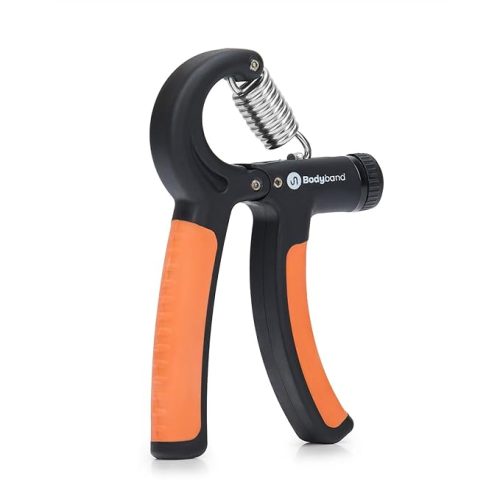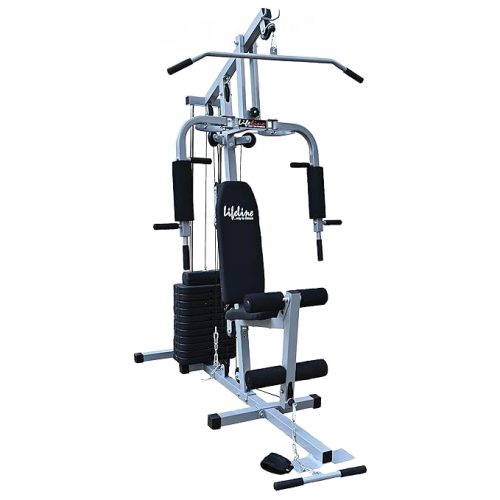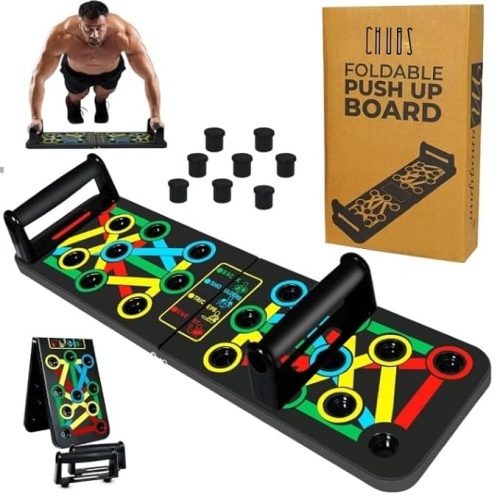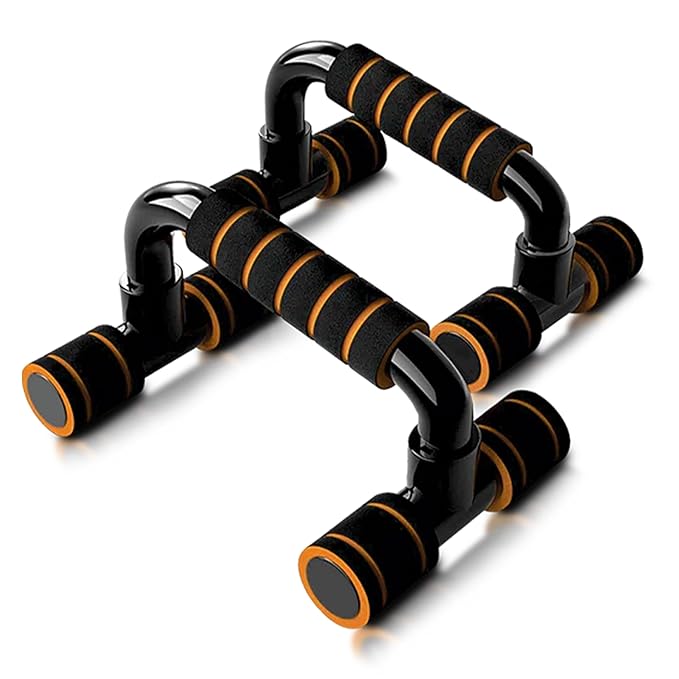
SLOVIC Pull Up Bar for Home Workout [Capacity:120 KG] | Stand for Home Gym with Non-Slip & Comfortable Grip | Push Up Board for Men | Home Gym Eqipement for Men & Women | Exercise Equipments

Original price was: ₹1,099.00.Current price is: ₹299.00.

Pull up bar No matter what your fitness goals are, no matter what your gym membership is like, no matter what your fitness schedule is – working out should be as easy and budget-friendly as it is to take a walk in the park.


Description

About this item

Pull Up Bar

Pull Up Bar: 7 Reasons the Push Up Bar Revolutionizes Your Upper Body Training
When it comes to building upper body strength, endurance, and stability, using the right equipment makes all the difference. While the pull up bar is a well-known tool for back and shoulder development, the push up bar complements it by targeting the chest, arms, and core in a controlled and effective way. By incorporating push up bars into your workout, you harness the benefits of pull up bar training principles—progressive overload, joint support, and muscle engagement—but in a way that focuses on pressing movements and functional strength.

Advanced Push Up Bar Training: Taking Your Upper Body Strength to the Next Level

For those serious about elevating their fitness game, integrating advanced techniques with the push up bar offers a new realm of muscle control, endurance, and performance. The principles behind pull up bar workouts—progressive resistance, stabilization, and structured repetition—translate beautifully to push up bar exercises, especially when aiming to challenge and redefine your upper body strength.

This section delves deeper into progressive training plans, advanced variations, injury prevention methods, and motivational strategies that ensure sustained improvement and safety.

Understanding Progressive Resistance with Push Up Bars

Progressive resistance is not about lifting heavier loads every session—it’s about improving form, increasing repetitions, extending hold times, and incorporating variations that challenge different muscle fibers.

✔ Form Over Load – Perfecting technique ensures that muscles are efficiently targeted without risk
✔ Time Under Tension – Holding positions longer intensifies muscle recruitment
✔ Range of Motion – Deepening push ups with the bar amplifies chest and shoulder engagement
✔ Stability Challenges – Performing exercises on unstable surfaces builds core strength
✔ Balanced Programming – Pairing push and pull exercises prevents muscular imbalances and overuse injuries

Advanced Push Up Bar Workouts for Strength and Definition

1. Archer Push Up – Unilateral Control

Objective: Increase strength in each arm independently
Steps:
✔ Position the bars wider than shoulder width
✔ As you lower down, shift weight onto one arm while extending the other out to the side
✔ Alternate sides with each rep
Reps: 3 sets of 8–10 per arm
Benefits: Improves unilateral strength, balance, and coordination

2. Plyometric Push Up – Explosive Power

Objective: Build upper body power and fast-twitch muscle fibers
Steps:
✔ Lower into a push up on the bars
✔ Push explosively, lifting hands off the bars at the top
✔ Land softly and repeat
Reps: 3 sets of 6–8 reps
Benefits: Boosts shoulder and arm explosiveness for athletic performance

3. Decline Push Up with Knee Tucks – Core and Balance

Objective: Engage abs while working pressing muscles
Steps:
✔ Place feet on a raised platform and hands on the push up bars
✔ Lower into a push up and, on the way up, tuck knees toward your chest
✔ Extend legs before the next rep
Reps: 3 sets of 12 reps
Benefits: Targets core, shoulders, and arms simultaneously

4. Slow Eccentric Push Up – Muscle Control

Objective: Build strength through controlled movements
Steps:
✔ Lower into a push up over a count of 5–7 seconds
✔ Pause at the bottom for 2 seconds
✔ Press back up smoothly
Reps: 4 sets of 8–10 reps
Benefits: Maximizes muscle fiber engagement and promotes stability

5. Isometric Push Up Hold – Endurance

Objective: Build muscle endurance and joint stability
Steps:
✔ Lower into a push up halfway
✔ Hold for 45–60 seconds
✔ Repeat for 3 sets
Benefits: Trains muscle endurance, posture, and mental toughness

6. Staggered Push Up – Shoulder Activation

Objective: Create asymmetry challenges that improve joint strength
Steps:
✔ Place one bar slightly forward and one back
✔ Perform push ups focusing on balanced weight distribution
Reps: 3 sets of 12 reps
Benefits: Increases shoulder stability and core engagement

7. Push Up Bar Plank with Arm Reaches – Functional Strength

Objective: Build core stability while incorporating upper body movement
Steps:
✔ Hold a plank position on push up bars
✔ Extend one arm forward and hold for 5 seconds
✔ Alternate sides
Reps: 3 sets of 10 reaches
Benefits: Improves core stability, balance, and shoulder strength

Combining Push and Pull Workouts: A Balanced Approach

A structured program that includes both push (push up bar) and pull (pull up bar) exercises ensures comprehensive development.

Weekly Balanced Routine

Day 1 – Push-Focused:
✔ Standard push ups – 3 sets of 15
✔ Decline push ups – 3 sets of 10
✔ Isometric holds – 3 sets of 45 seconds

Day 2 – Pull-Focused:
✔ Pull ups – 3 sets of 8
✔ Chin ups – 3 sets of 10
✔ Negative pull ups – 3 sets of 6

Day 3 – Mixed Functional Day:
✔ Archer push ups – 3 sets of 8 per side
✔ Plank with reaches – 3 sets of 10
✔ Assisted pull ups – 3 sets of 10

Injury Prevention: Ensuring Safe Push Up Bar Training

Common Injuries

✔ Wrist strain from poor grip or alignment
✔ Shoulder impingement due to shallow mobility
✔ Elbow overuse from repetitive stress

Prevention Strategies

✔ Warm up with shoulder rolls and dynamic stretches
✔ Maintain a neutral spine during push ups
✔ Engage core muscles to avoid unnecessary strain
✔ Perform mobility exercises between sets
✔ Gradually increase intensity rather than overloading too fast

Physiotherapist Anil Yadav:

“Wrist protection is crucial. Push up bars reduce pressure, but if form is compromised, the risk of injury increases. Start light and build up safely.”

Nutrition Plans for Advanced Push Up Bar Workouts

Sample Meal Plan for Strength Gains

Breakfast:
✔ Scrambled eggs with spinach and avocado
✔ Whole grain toast with almond butter

Mid-Morning Snack:
✔ Protein shake with berries and flaxseed

Lunch:
✔ Grilled chicken breast with quinoa and steamed broccoli
✔ A side of mixed greens with olive oil

Afternoon Snack:
✔ Greek yogurt with nuts and seeds

Dinner:
✔ Baked salmon with sweet potato mash
✔ Sauteed kale and carrots

Hydration Tips:
✔ Drink water consistently throughout the day
✔ Electrolyte drinks after intense sessions
✔ Avoid sugary beverages that impair recovery

Recovery Methods That Support Muscle Growth

Foam Rolling

✔ Roll over shoulders and upper back to prevent tightness
✔ Focus on chest muscles post-push ups to relieve tension

Breathing Techniques

✔ Deep breathing between sets helps lower cortisol levels
✔ Incorporate diaphragmatic breathing to enhance oxygen delivery

Active Recovery

✔ Light swimming or yoga on rest days promotes circulation
✔ Stretch the wrist flexors, chest, and shoulders regularly

Mental Resilience: Staying Motivated

✔ Track your workout progress in a journal
✔ Visualize goals before each session
✔ Reward yourself with rest days after hitting milestones
✔ Surround yourself with supportive fitness communities
✔ Keep reminding yourself that consistency beats intensity

Motivation Coach Priya Deshmukh:

“The mind and body are interconnected. Pushing through discomfort without listening to your body leads to injury, but training with awareness creates sustainable results.”

Frequently Asked Questions (FAQs)

Q1: Can push up bar workouts replace pull up bar training?
✔ They complement each other. Push bars target pressing muscles, while pull bars focus on pulling muscles. Combining both ensures full upper body development.

Q2: How long should each session be?
✔ 45–60 minutes, including warm-up, workout, and cooldown.

Q3: Can older adults safely use push up bars?
✔ Yes, especially with modified routines like incline push ups. It helps build strength without excessive strain.

Q4: How often should I train?
✔ 3–4 times a week is ideal for balancing effort and recovery.

Real-Life Transformations

Ritika, 35 – Working Professional:

“Push up bars allowed me to train safely at home. I noticed improvements in posture and strength within a month.”

Harsh, 27 – Athlete:

“Adding plyometric push ups gave me the explosiveness I needed for sports. It transformed how I train.”

Meena, 42 – Fitness Enthusiast:

“Combining push and pull bar workouts helped me overcome shoulder pain and build confidence in daily activities.”

Final Thoughts

Integrating the push up bar into your workout routine allows you to harness the proven principles of pull up bar training—progressive resistance, controlled movement, and muscle engagement—but in a way that strengthens the pushing muscles of the upper body.

From basic variations to advanced drills, structured routines, expert advice, and recovery strategies, this guide offers everything you need to build stronger, more resilient arms, shoulders, and core. With a balanced approach that includes proper nutrition, safe form, and consistent motivation, you’re set to achieve lasting fitness gains.

Empower your workouts with the push up bar, and let the strength you build today fuel the resilience and performance you’ll enjoy tomorrow.

Stay consistent, stay aware, and embrace every rep as progress.
Whether you’re a beginner aiming to improve form or an advanced athlete striving for peak performance, the push up bar is a versatile and essential addition to your workout routine. This guide explores how the push up bar amplifies strength training, offering expert advice, exercises, recovery tips, nutrition plans, and motivational strategies to help you maximize results.
What Is a Push Up Bar and Why It Works with Pull Up Bar Training Principles?
A push up bar is a handheld fitness tool that elevates the hands during push ups, allowing for deeper movement, reduced wrist strain, and increased muscle engagement. While the pull up bar emphasizes pulling exercises such as chin-ups and rows, the push up bar applies the same resistance-training logic to pressing movements, making it an ideal complement to full upper body strength routines.
Key Features
✔ Ergonomic grips for wrist comfort and proper alignment
✔ Elevated handles for deeper range of motion and increased muscle stretch
✔ Non-slip base for stability during intense workouts
✔ Lightweight and portable for home or gym use
✔ Suitable for users at all fitness levels
The push up bar enhances the effectiveness of upper body exercises by enabling deeper muscle contractions while reducing joint stress—principles that mirror the structured approach of pull up bar training.
Benefits of Using Push Up Bars Alongside Pull Up Bar Workouts
1.Improved Range of Motion – Allows deeper push ups for greater chest activation
2.Joint Protection – Reduces strain on wrists, shoulders, and elbows during pressing exercises
3.Increased Core Engagement – Forces better posture and stabilization throughout the exercise
4.Balanced Muscle Development – Complements pull-based workouts by strengthening pushing muscles
5.Enhanced Grip Strength – Ergonomic design supports wrist and forearm endurance
6.Adaptable for All Levels – Resistance can be increased by adjusting form or reps
7.Functional Strength Gains – Helps with daily tasks such as lifting, pushing, and carrying
Top 7 Push Up Bar Exercises to Maximize Strength and Stability
1. Standard Push Up with Elevated Handles
Target muscles: Chest, triceps, shoulders
✔ Place push up bars shoulder-width apart
✔ Lower your chest toward the bars and push back up
✔ Perform 3 sets of 12–15 reps
Benefits: Improves muscle strength and endurance while reducing wrist strain
2. Wide-Grip Push Up for Chest Expansion
Target muscles: Chest, shoulders
✔ Place bars wider than shoulder width
✔ Lower into a push up, stretching the chest muscles
✔ Push back up with controlled motion
✔ Perform 3 sets of 12 reps
Benefits: Targets outer chest muscles for a broader upper body
3. Close-Grip Push Up for Triceps Definition
Target muscles: Triceps, shoulders
✔ Place bars close together beneath the chest
✔ Perform push ups focusing on pressing through the triceps
✔ Perform 3 sets of 12–15 reps
Benefits: Builds arm strength and enhances pushing power
4. Incline Push Up for Beginners  Pull up bar
Target muscles: Chest, core, arms
✔ Place bars on a raised surface such as a bench
✔ Perform push ups with controlled depth
✔ Perform 3 sets of 10–15 reps
Benefits: Reduces load for beginners while improving form and strength
5. Decline Push Up for Advanced Training  Pull up bar
Target muscles: Shoulders, upper chest
✔ Place feet on a raised platform and hands on push up bars
✔ Lower chest toward the bars and press up
✔ Perform 3 sets of 8–12 reps
Benefits: Intensifies workout for muscle growth and definition
6. Plank to Push Up Transition  Pull up bar
Target muscles: Core, arms, shoulders
✔ Start in a plank position on push up bars
✔ Transition to push up position by pressing up one arm at a time
✔ Repeat for 3 sets of 10 reps
Benefits: Builds coordination and core strength
7. L-Sit Hold for Core Activation
Target muscles: Core, shoulders, arms
✔ Sit between bars, lift legs straight in front
✔ Hold for 20–30 seconds per set
✔ Perform 3 sets
Benefits: Strengthens abdominal muscles and improves posture
Expert Advice: Combining Push Up Bars with Pull Up Bar Principles
Fitness Expert Neha Kulkarni:  Pull up bar
“Incorporating push up bars into your workout balances push and pull exercises, ensuring symmetrical development and reducing the risk of muscle imbalances.”
Physiotherapist Rahul Mehta:  Pull up bar
“The push up bar is especially beneficial for individuals who experience wrist discomfort. Elevation and grip support allow safer execution of pressing movements.”
Sports Nutritionist Aditi Sharma:
“Strength-building isn’t just about reps—it’s about recovery and fuel. Pair push up bar workouts with protein and micronutrient-rich meals for optimal muscle repair.”
Recovery Techniques After Push Up Bar Workouts
✔ Stretching: Focus on chest, shoulders, and wrists post-session
✔ Hydration: Drink water and electrolyte beverages to restore balance
✔ Rest: Allow at least 48 hours between intense pushing workouts
✔ Foam Rolling: Use a foam roller to relieve muscle tension
✔ Sleep: Aim for 7–8 hours per night to aid muscle repair and hormonal balance
Nutrition Tips to Support Upper Body Training
Pre-Workout  Pull up bar
✔ Complex carbohydrates such as oats or bananas
✔ Lean protein for muscle endurance
✔ Healthy fats like almonds or flax seeds for sustained energy
Post-Workout
✔ Protein shakes or meals with lean protein sources
✔ Leafy greens for vitamins and minerals
✔ Hydration to replace lost fluids and support recovery
Daily Essentials  Pull up bar
✔ Balanced meals incorporating whole grains, fruits, and vegetables
✔ Avoid processed foods high in sugars and unhealthy fats
✔ Include anti-inflammatory foods such as turmeric, ginger, and berries
Motivational Strategies for Consistent Training
✔ Track progress through journals or fitness apps
✔ Set weekly challenges, such as increasing reps or reducing rest time
✔ Reward yourself for achieving milestones
✔ Incorporate music or workout playlists for mental energy
✔ Work out with a partner or group for accountability
Motivational Coach Priya Singh:
“Fitness is as much mental as it is physical. Celebrate small victories—they fuel long-term commitment.”
Safety Guidelines to Prevent Injuries  Pull up bar
✔ Warm up with light cardio and dynamic stretches
✔ Use proper form to avoid strain on joints
✔ Avoid locking elbows at the top of each push up
✔ Start with fewer reps and gradually increase
✔ Stop if you feel sharp pain or discomfort
✔ Pair pushing exercises with pulling exercises for balanced strength
How to Choose the Right Push Up Bar
✔ Ergonomic handles that support a natural wrist position
✔ Non-slip base for stability during workouts
✔ Adjustable or foldable designs for portability
✔ Durable materials like steel or reinforced plastic
✔ Appropriate weight capacity for your training needs
Real-Life Success Stories
Amit, 32 – Fitness Enthusiast:  Pull up bar
“Using push up bars transformed my workouts. My form improved, and I no longer experience wrist pain during pressing movements.”
Sneha, 28 – Athlete:  Pull up bar
“After pairing push up bars with pull up bar exercises, I achieved better muscle balance and felt stronger across my upper body.”
Ravi, 40 – Desk Worker:
“Push up bars helped me build functional strength that improved posture and reduced shoulder discomfort from long hours at the desk.”
Frequently Asked Questions (FAQs)
Q1: Can beginners use push up bars safely?
✔ Yes, especially with incline or reduced reps to build strength gradually.
Q2: Should push up and pull up bar workouts be combined?
✔ Absolutely. Balanced training prevents muscle imbalances and supports joint health.
Q3: How many times per week should I train with push up bars?
✔ 2–3 times per week is ideal, allowing recovery days in between.
Q4: Do push up bars reduce wrist pain?
✔ Yes. Elevation and ergonomic grips provide wrist support, allowing safer movements.
Final Thoughts  Pull up bar
The push up bar is more than an accessory—it’s a game-changer for anyone looking to complement their pull up bar workouts with pressing movements that build upper body strength, endurance, and stability. Through targeted exercises, proper form, recovery strategies, nutrition, and motivation, this simple tool delivers impressive results without risking injury.
Whether you’re training at home, in the gym, or outdoors, the push up bar allows you to train smarter, stay consistent, and enjoy every step of your fitness journey. Combine pushing and pulling exercises, track your progress, and fuel your body with the right nutrients—and you’ll unlock the strength, confidence, and performance you’ve been striving for.
Empower your upper body workouts with the push up bar and experience the strength, balance, and endurance that come from structured, intelligent training.

Reviews

There are no reviews yet.

Be the first to review “SLOVIC Pull Up Bar for Home Workout [Capacity:120 KG] | Stand for Home Gym with Non-Slip & Comfortable Grip | Push Up Board for Men | Home Gym Eqipement for Men & Women | Exercise Equipments”

Your email address will not be published. Required fields are marked *

Go to Top