

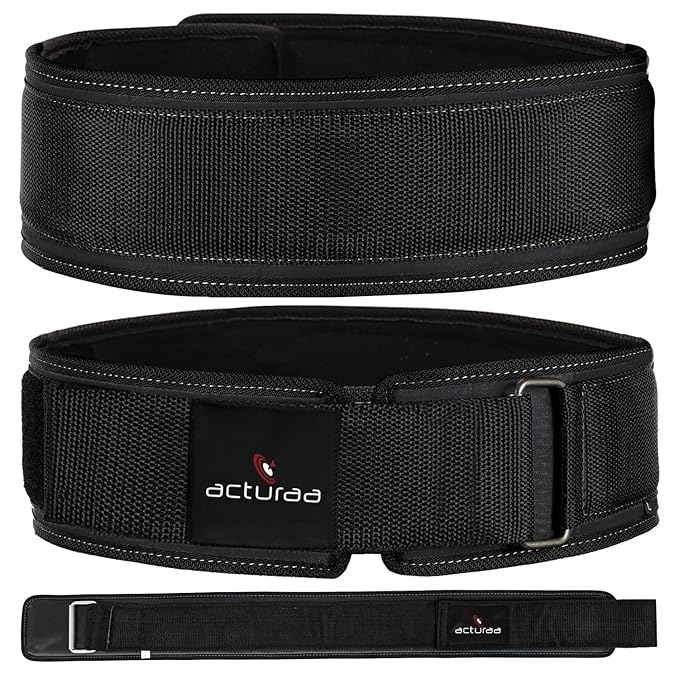
Power Lifting Belt is a supportive piece of equipment worn around the waist . It’s designed to provide stability and support to the lower back
acturaa 6 Inch Weight Lifting Belts For Gym | Gym Belt For Men & Women | Workout Exercise Powerlifting Deadlift Belt
Original price was: ₹899.00.₹499.00Current price is: ₹499.00.
Description
Power Lifting Belt
:The Ultimate Guide for Strength, Safety, and Performance
Advanced Workouts, Recovery Techniques, and Expert Recommendations for Power Lifting Belt Use
The effectiveness of a power lifting belt is rooted in biomechanics and intra-abdominal pressure. Here’s how it works:
1.Intra-Abdominal Pressure
When you brace your core against a belt, the pressure inside your abdomen increases. This pressure supports the spine by creating a rigid structure that protects the lower back during heavy lifts.
2.Load Distribution
A power lifting belt helps distribute the load evenly across the torso, reducing the strain on specific muscle groups and joints.
3.Postural Awareness
Wearing a belt heightens your awareness of core positioning. It becomes easier to maintain a neutral spine and engage the correct muscles throughout the lift.
4.Breathing Mechanics
Controlled breathing techniques paired with belt use allow lifters to maintain tension without compromising endurance or oxygen flow
A power lifting belt is a cornerstone of effective strength training, offering unparalleled support for core engagement, spinal stability, and safe heavy lifting. While understanding its basic use is important, knowing how to integrate the belt into structured workouts, recovery protocols, and advanced lifting strategies is what truly elevates your training regimen.
In this second part of our in-depth guide, we will explore advanced workout plans specifically designed to complement belt use, techniques for optimizing performance, recovery strategies that prevent injury, and expert recommendations for incorporating this premium accessory into your training lifestyle. Whether you are chasing new personal records or aiming for long-term resilience, this section provides the actionable insights you need to train smarter and more safely.
⸻
Advanced Workout Plans Using a Power Lifting Belt
A well-designed workout plan ensures that the power lifting belt serves as an ally—not a crutch. The following sample routines are tailored to help you push limits while ensuring form, balance, and strength development remain intact.
⸻
✅ Heavy Lifting Routine (Strength Focus)
Goal: Build maximal strength while protecting the spine and engaging the core.
Frequency: 3–4 times per week
Duration: 60–75 minutes per session
Warm-Up (10–15 minutes)
•Foam rolling lower back and hips – 5 minutes
•Dynamic stretches (leg swings, arm circles) – 5 minutes
•Core bracing drills without the belt – 5 minutes
Main Workout
1.Back Squat – 5 sets of 5 reps at 85% 1RM
•Use the power lifting belt for added stability
•Focus on deep bracing and controlled descent
2.Deadlift – 4 sets of 3–5 reps at 90% 1RM
•Use the belt for maximum support
•Prioritize a neutral spine and engage glutes throughout
3.Overhead Press – 4 sets of 6 reps
•Keep the belt on during the press
•Use breathing techniques to stabilize the torso
4.Barbell Rows – 3 sets of 8–10 reps
•Wear the belt for added lumbar support
•Avoid jerky movements
Cooldown (10 minutes)
•Stretch hip flexors, hamstrings, and shoulders
•Deep breathing and core relaxation exercises
⸻
✅ Power and Explosiveness Routine
Goal: Improve lifting speed, coordination, and power while training core stability.
Frequency: 2–3 times per week
Duration: 45–60 minutes per session
Warm-Up (10 minutes)
•Jump rope – 3 minutes
•Mobility drills – 7 minutes
Main Workout
1.Speed Deadlifts – 6 sets of 3 reps at 70% 1RM
•Focus on fast bar movement while maintaining form
2.Box Squats – 4 sets of 6 reps
•Use the belt to help stay upright and balanced
3.Push Press – 4 sets of 8 reps
•Engage core and hips explosively with each press
4.Farmer’s Carries – 4 sets of 40 meters
•Belt on throughout to stabilize the core
Cooldown (5–10 minutes)
•Foam rolling shoulders and hips
•Stretching routines for spinal alignment
✅ Endurance and Hypertrophy Routine
Goal: Build muscle mass and endurance without compromising spinal health.
Frequency: 3–4 times per week
Duration: 60 minutes per session
Warm-Up (10 minutes)
•Light cardio – 5 minutes
•Bodyweight squats – 2 sets of 20
•Core activation exercises – 5 minutes
Main Workout
1.Front Squats – 4 sets of 12 reps
•Belt on for stability
•Moderate weights with high reps
2.Romanian Deadlifts – 3 sets of 12 reps
•Slow, controlled movements with proper bracing
3.Bench Press – 4 sets of 10 reps
•Engage the core with the belt to prevent arching
4.Lunges – 3 sets of 15 reps per leg
•Use the belt for posture control
5.Core Circuit – 3 rounds of
•Planks – 60 seconds
•Hanging leg raises – 12 reps
•Cable twists – 15 reps per side
Cooldown (10 minutes)
•Stretch chest, hamstrings, and lower back
•Controlled breathing to relax muscleRecovery Techniques to Complement Belt Use
Proper recovery ensures that the power lifting belt aids in long-term strength development without contributing to overtraining or joint strain. Below are expert-approved techniques.
✅ Mobility and Flexibility Work
A strong, mobile body supports heavy lifting. Stretching helps prevent muscle tightness that can compromise form during lifts.
•Hip Flexor Stretch – 3 sets of 45 seconds per side
•Thoracic Spine Extensions – 3 sets of 15
•Cat-Cow Pose – 3 sets of 10 cycles
•Chest Stretch Against Wall – 2 sets of 1 minute
✅ Breathing Exercises
Controlled breathing promotes spinal support and improves endurance during heavy lifts.
•Diaphragmatic Breathing
Breathe deeply into the abdomen, expanding outward, before bracing the core.
•Box Breathing
Inhale for 4 counts, hold for 4, exhale for 4, and pause for 4 before the next breath.
✅ Active Recovery Days
Incorporate low-intensity movements on rest days to promote blood flow without overloading the muscles.
•Swimming or cycling – 20–30 minutes
•Bodyweight exercises like planks and gentle stretching
•Walking outdoors to encourage circulation
✅ Sleep and Nutrition Strategies
Adequate recovery starts with rest and proper fuel.
✔ Sleep 7–9 hours per night for optimal hormone regulation
✔ Consume protein-rich meals to aid muscle repair
✔ Hydrate throughout the day to prevent cramps and fatigue
✔ Include anti-inflammatory foods like leafy greens and omega-3 sources
Advanced Techniques for Expert Lifters
For those seeking to fine-tune their lifting experience, here are techniques to fully leverage the power lifting belt.
⸻
✅ Bracing With Breath Control
Before lifting, inhale deeply into the diaphragm and then brace the core by pushing outward against the belt while maintaining tension. This increases stability without restricting airflow.
⸻
✅ Partial Reps With Support
Use the belt during partial range-of-motion exercises to strengthen specific points in the lift while training posture and muscle recruitment.
The effectiveness of a power lifting belt is rooted in biomechanics and intra-abdominal pressure. Here’s how it works:
1.Intra-Abdominal Pressure
When you brace your core against a belt, the pressure inside your abdomen increases. This pressure supports the spine by creating a rigid structure that protects the lower back during heavy lifts.
2.Load Distribution
A power lifting belt helps distribute the load evenly across the torso, reducing the strain on specific muscle groups and joints.
3.Postural Awareness
Wearing a belt heightens your awareness of core positioning. It becomes easier to maintain a neutral spine and engage the correct muscles throughout the lift.
4.Breathing Mechanics
Controlled breathing techniques paired with belt use allow lifters to maintain tension without compromising endurance or oxygen flow
⸻
✅ Dynamic Pausing
Introduce pauses at the most challenging points of the lift (e.g., bottom of a squat) to improve time-under-tension while maintaining control and alignment.
⸻
✅ Integrating Core Isolation Movements
Supplement belt use with exercises like hanging leg raises and Russian twists to prevent reliance on external support and build intrinsic core strength.
⸻
Expert Recommendations for Choosing and Using the Best Power Lifting Belt
Professional athletes, coaches, and rehabilitation specialists recommend selecting a power lifting belt that aligns with both performance goals and safety requirements.
⸻
✅ Prioritize Comfort Without Compromising Support
A belt that’s too stiff may cause discomfort, while one that’s too soft won’t provide adequate support. Strike a balance with high-quality materials like genuine leather or reinforced synthetic fibers
Common Mistakes When Using a Power Lifting Belt
Even experienced lifters can misuse power lifting belts. Here are frequent errors and how to avoid them:
❌ Wearing the Belt Too Tight
Solution: Adjust the belt so it provides support without restricting breathing or circulation.
❌ Using the Belt for All Exercises
Solution: Reserve belt use for compound lifts that place significant stress on the spine.
❌ Not Bracing the Core
Solution: Always breathe deeply and engage your core before initiating the lift.
❌ Incorrect Positioning
Solution: Ensure the belt is centered on your waist and covers both the lower back and abdomen.
❌ Neglecting Warm-Ups
Solution: Incorporate mobility exercises to prepare your muscles before using the belt for heavy lifts.
Expert Insights: When and How to Use Power Lifting Belts
Fitness professionals recommend integrating power lifting belts into training with careful consideration of form, intensity, and individual needs. Here’s what experts advise:
✔ Use Belts During Heavy Lifts (Above 80% of Your 1RM)
A belt provides essential support when lifting at high intensity.
✔ Train Without Belts Occasionally
To build core strength naturally, alternate belt use with belt-free training sessions.
✔ Combine with Proper Breathing Techniques
Exhale during the lift and inhale during lowering phases to maintain pressure and control.
✔ Consult a Coach for Form Checks
Working with a professional ensures you’re using the belt effectively without compromising posture or technique.
⸻
Conclusion – Elevate Your Training with a Premium Power Lifting Belt
A power lifting belt is more than just a training accessory—it’s a strategic tool that enhances performance, protects against injury, and supports the core muscles during high-stress lifts. Whether you are a seasoned competitor or a beginner aiming to lift safely, investing in a high-quality belt is a step toward smarter, more effective training.
By understanding the science behind belt use, selecting the right type, and adhering to expert guidelines, you’ll unlock new levels of strength and resilience. Incorporate the belt into your training with intention, and experience how this premium piece of equipment can transform your fitness journey.
.
⸻
✅ Use the Belt as a Training Tool, Not a Crutch
Always perform core activation exercises without the belt to build natural strength. Reserve belt use for maximal lifts or technical movements where spinal protection is crucial.
⸻
✅ Consult a Certified Trainer
A professional can help assess posture, recommend suitable belt sizes, and develop a tailored program to incorporate belt use effectively.
⸻
✅ Invest in Longevity
Choose a belt with reinforced stitching, anti-burst materials, and adjustable fastening systems to ensure durability over years of training.
⸻
Conclusion – Unlock Strength and Safety with a Power Lifting Belt
The power lifting belt is a premium accessory that empowers athletes to lift heavier, train smarter, and recover more efficiently. Through structured workout plans, expert breathing techniques, and mindful recovery strategies, you can use the belt not just as a safety measure but as a catalyst for strength, endurance, and long-term progress.
By integrating the belt with purpose—using it for heavy lifts, respecting recovery protocols, and building core strength outside of belt-supported exercises—you’ll develop a sustainable and powerful training regimen. Whether you’re preparing for a competition or simply aiming to elevate your performance, the power lifting belt is an investment in your fitness journey and overall well-being.
In the world of strength training and competitive lifting, every detail matters. From proper technique to progressive overload, athletes continually seek tools that enhance performance while ensuring safety. Among the most trusted and indispensable accessories in a lifter’s arsenal is the power lifting belt—a premium tool that supports spinal stability, optimizes lifting posture, and helps maximize strength gains.
The effectiveness of a power lifting belt is rooted in biomechanics and intra-abdominal pressure. Here’s how it works:
1.Intra-Abdominal Pressure
When you brace your core against a belt, the pressure inside your abdomen increases. This pressure supports the spine by creating a rigid structure that protects the lower back during heavy lifts.
2.Load Distribution
A power lifting belt helps distribute the load evenly across the torso, reducing the strain on specific muscle groups and joints.
3.Postural Awareness
Wearing a belt heightens your awareness of core positioning. It becomes easier to maintain a neutral spine and engage the correct muscles throughout the lift.
4.Breathing Mechanics
Controlled breathing techniques paired with belt use allow lifters to maintain tension without compromising endurance or oxygen flow
Whether you’re an elite competitor preparing for a meet, a dedicated gym-goer aiming to push personal records, or someone recovering from injury with expert guidance, a power lifting belt is more than just an accessory—it’s an investment in your longevity, form, and progress. Carefully designed, scientifically validated, and engineered with high-performance materials, power lifting belts are a staple in serious training regimens.
In this comprehensive guide, we’ll explore the features, benefits, types, usage tips, and expert advice surrounding power lifting belts. From how they assist in lifting heavy loads to the nuances of selecting the right belt, this guide will serve as your go-to resource for making the most of this essential piece of strength equipment.
⸻
What Is a Power Lifting Belt?
A power lifting belt is a supportive accessory worn around the waist, designed to stabilize the spine and core during heavy lifting exercises such as squats, deadlifts, overhead presses, and bench presses. By increasing intra-abdominal pressure, the belt helps protect the lower back, improve posture, and prevent injuries that can occur due to improper form or excessive strain.
Unlike general weightlifting belts, power lifting belts are often thicker, stiffer, and built for maximal support. They are engineered to assist lifters in performing heavy lifts with confidence while maintaining spinal alignment and muscular control.
⸻
Why Power Lifting Belts Are a Premium Training Essential
Power lifting belts are regarded as a premium tool because of their ability to enhance performance and reduce injury risk during strenuous lifts. Below are key reasons why they are considered indispensable by professionals.
✅ Enhanced Spinal Stability
During heavy lifts, the spine is subjected to compressive forces that can lead to discomfort or injury. A power lifting belt helps stabilize the spine by increasing intra-abdominal pressure, which acts like a supportive brace around the core.
✅ Improved Lifting Mechanics
By providing tactile feedback and physical support, power lifting belts help lifters maintain proper posture throughout the movement. This encourages correct form and reduces the likelihood of rounding the back or overextending the lumbar spine.
✅ Confidence for Heavy Lifts
Wearing a belt offers psychological assurance, allowing lifters to attempt heavier loads with confidence. This mental edge can translate to improved performance during competitive or personal lifting goals.
✅ Injury Prevention
One of the primary reasons athletes rely on power lifting belts is injury prevention. By reinforcing the lower back and abdomen, belts help minimize strain on muscles and ligaments, especially during deadlifts and squats.
✅ Targeted Core Engagement
A power lifting belt encourages the core muscles to contract more efficiently. This increased engagement helps lifters build stronger abdominal and back muscles over time.
✅ Durability and Long-Term Use
Premium power lifting belts are crafted from durable materials such as genuine leather, reinforced nylon, and high-grade steel buckles. These materials ensure long-lasting performance, making the belt a worthwhile investment for serious lifters.
⸻
How Power Lifting Belts Work: The Science Behind the Support
The effectiveness of a power lifting belt is rooted in biomechanics and intra-abdominal pressure. Here’s how it works:
1.Intra-Abdominal Pressure
When you brace your core against a belt, the pressure inside your abdomen increases. This pressure supports the spine by creating a rigid structure that protects the lower back during heavy lifts.
2.Load Distribution
A power lifting belt helps distribute the load evenly across the torso, reducing the strain on specific muscle groups and joints.
3.Postural Awareness
Wearing a belt heightens your awareness of core positioning. It becomes easier to maintain a neutral spine and engage the correct muscles throughout the lift.
4.Breathing Mechanics
Controlled breathing techniques paired with belt use allow lifters to maintain tension without compromising endurance or oxygen flow.
⸻
Reviews
There are no reviews yet.