

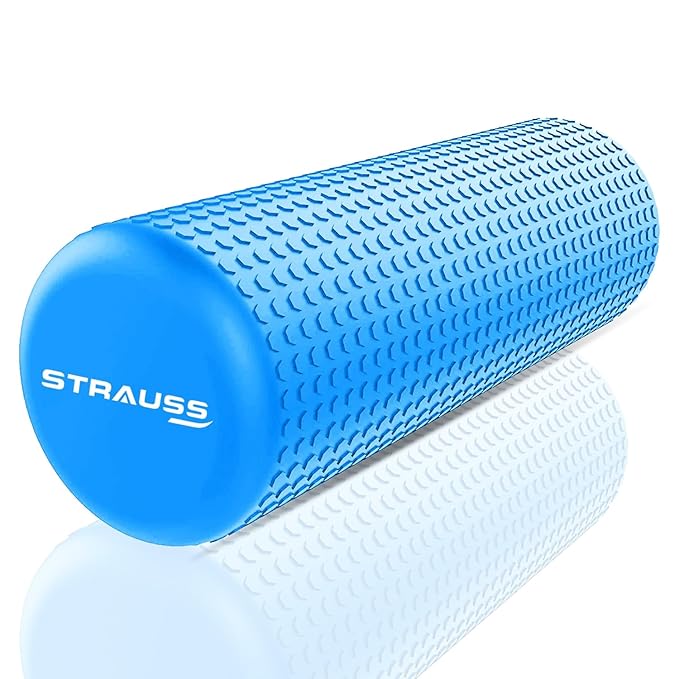
Yoga for exercise roller Strauss Foam Roller Is Great for Physical Therapy, Before or After Exercise, Yoga, And Massage Therapy
Strauss Yoga Foam Roller | Deep Tissue Massage Roller for Knee Exercise, Muscles Recovery & Physiotherapy | Home Gym Fitness Equipment for Full Body Relaxation and Flexibility | 30cm,(Blue)
Original price was: ₹1,375.00.₹699.00Current price is: ₹699.00.
Description
⸻
Top 7 Benefits of Yoga for Exercise with the Right Yoga Foam Roller
Incorporating yoga for exercise into your daily routine brings balance, flexibility, and strength. When paired with the right equipment like a yoga foam roller, your practice can reach new heights. The foam roller is an essential tool that complements yoga by improving muscle recovery, reducing tension, and enhancing mobility.
In this guide, we explore how yoga for exercise is elevated with the use of a yoga foam roller. From beginner stretches to advanced postures, foam rollers can make a big difference in how your body feels and performs.
⸻
What is a Yoga Foam Roller?
A yoga foam roller is a cylindrical tool made from high-density foam, designed to support various movements, stretches, and muscle releases. It is widely used in yoga practices to enhance flexibility, improve posture, and prevent injuries.
Unlike heavier equipment, the yoga foam roller is lightweight, portable, and user-friendly. It’s suitable for practitioners of all levels, from those just beginning yoga for exercise to advanced users looking to deepen their stretches.
⸻
How Does a Foam Roller Help in Yoga for Exercise?
Adding a foam roller to your yoga routine offers multiple benefits:
1.Improved Flexibility
Foam rolling helps release tight muscles and fascia, allowing you to stretch deeper in yoga poses.
2.Enhanced Mobility
Rolling key muscle groups before or after your session boosts range of motion.
3.Faster Recovery
It promotes blood circulation, reducing soreness and helping muscles recover quickly after intense sessions.
4.Better Posture
Using a foam roller helps align your spine and shoulders, allowing for more accurate and comfortable poses.
5.Injury Prevention
By addressing muscle imbalances and tension, foam rolling reduces the risk of strains or overuse injuries.
⸻
Types of Yoga Foam Rollers
Choosing the right foam roller depends on your experience level and goals.
Soft Foam Rollers
•Ideal for beginners.
•Provides gentle pressure.
•Helps relax muscles without discomfort.
Medium-Density Rollers
•Suitable for intermediate users.
•Offers moderate pressure for deeper stretches.
Firm or Textured Rollers
•Best for advanced users.
•Targets stubborn knots and tight areas.
•Encourages deep tissue release.
⸻
How to Use a Yoga Foam Roller in Your Routine
Pre-Workout Activation
•Roll your hips, quads, and shoulders.
•Focus on areas that feel tight or stiff.
•Helps activate muscles for better engagement during yoga poses.
Post-Workout Recovery
•Use longer rolling motions to soothe sore muscles.
•Focus on areas that were heavily engaged.
•Pair rolling with deep breathing exercises.
Integrating Foam Rolling with Yoga Poses
•Perform stretches such as Pigeon Pose or Child’s Pose while rolling.
•Use the foam roller to support balance in poses like Bridge or Downward Dog.
•Roll along the spine while lying flat to open up the back muscles.
⸻
Beginner-Friendly Foam Roller Yoga Sequence
1. Seated Roll-Out
•Sit with legs extended.
•Place the foam roller under thighs.
•Slowly roll from hips to knees.
•Repeat for 1–2 minutes.
2. Shoulder Release
•Lie on the roller with it positioned under your shoulder blades.
•Extend arms and gently roll side to side.
•Perform for 1 minute per side.
3. Hip Flexor Stretch
•Place foam roller under one hip.
•Cross the opposite leg over.
•Lean into the stretch and hold for 30 seconds.
4. Child’s Pose with Support
•Use the roller under the chest.
•Fold forward into Child’s Pose.
•Relax and breathe deeply for 1 minute.
What is a Yoga Foam Roller?
A yoga foam roller is a cylindrical tool made from high-density foam, designed to support various movements, stretches, and muscle releases. It is widely used in yoga practices to enhance flexibility, improve posture, and prevent injuries.
Unlike heavier equipment, the yoga foam roller is lightweight, portable, and user-friendly. It’s suitable for practitioners of all levels, from those just beginning yoga for exercise to advanced users looking to deepen their stretches.
⸻
Intermediate Foam Roller Yoga Routine
1. Rolling Squat Prep
•Stand with the roller behind your back.
•Lean gently and perform shallow squats.
•Engage core muscles while moving up and down.
2. Spine Extension Roll
•Lie on the roller along the spine.
•Extend arms overhead.
•Open chest and hold for 30–60 seconds.
3. Hamstring Stretch
•Place the roller under your thighs.
•Fold forward at the hips.
•Hold for 1 minute and switch legs.
4. Plank Support
•Place roller under forearms during plank pose.
•Engage your core and hold for 30 seconds.
⸻
Advanced Foam Roller Yoga Sequence
1. Deep Tissue Release
•Use a firm textured roller.
•Roll along targeted muscle groups such as glutes, IT bands, and calves.
•Focus on areas with tension for 2–3 minutes.
2. Balance Pose Integration
•Perform Warrior III pose with roller under your supporting foot.
•Enhance balance and core strength.
3. Dynamic Spine Stretch
•Roll along the back while moving from Cobra Pose into Upward Dog.
•Focus on controlled breathing.
4. Partner-Assisted Rolling
•Work with a partner to target deeper muscle release.
•Incorporate assisted stretches with breathing exercises.
⸻
Safety Guidelines for Using a Yoga Foam Roller
1.Avoid Bony Areas
Foam roll soft tissue like muscles rather than joints or bones to prevent injury.
2.Move Slowly
Controlled movements ensure muscles respond to the stretch rather than being shocked.
3.Breathe Deeply
Focused breathing enhances relaxation and helps muscles release tension.
4.Listen to Your Body
If you feel sharp pain, stop immediately and consult a professional.
⸻
How Often Should You Use a Foam Roller?
•Daily: For mobility, recovery, and stress relief.
•Before Yoga: To activate muscles.
•After Yoga: To cool down and stretch deeply.
Consistency is key to maximizing the benefits of yoga for exercise with a foam roller.
⸻
Incorporating Foam Rolling into Your Wellness Routine
Beyond yoga, foam rolling is perfect for:
•Strength training recovery
•Pilates sessions
•Meditation practice
•Physical therapy routines
Adding foam rolling before or after exercise sessions ensures you maintain flexibility and prevent injury.
⸻
Incorporating yoga for exercise into your daily routine brings balance, flexibility, and strength. When paired with the right equipment like a yoga foam roller, your practice can reach new heights. The foam roller is an essential tool that complements yoga by improving muscle recovery, reducing tension, and enhancing mobility.
In this guide, we explore how yoga for exercise is elevated with the use of a yoga foam roller. From beginner stretches to advanced postures, foam rollers can make a big difference in how your body feels and performs.
Testimonials from Yoga Enthusiasts
Asha, 34 – Yoga Practitioner
“I started using a yoga foam roller as part of my stretching routine. I feel lighter and more flexible after every session. It’s become an essential tool in my yoga practice.”
Rahul, 42 – Fitness Coach
“Combining foam rolling with yoga helped me improve my posture and reduce muscle soreness. I recommend it to clients who want quick recovery and deeper stretches.”
The Ultimate Guide to Yoga for Exercise with a Yoga Foam Roller
Adding a yoga foam roller to your routine can revolutionize how you approach yoga for exercise. It’s not just a tool—it’s a companion that helps you go deeper into stretches, improve mobility, and recover faster. This comprehensive guide will explore everything you need to know about integrating a yoga foam roller into your practice, offering detailed sequences, safety tips, benefits, and more.
⸻
Why Yoga for Exercise Benefits from a Foam Roller
Yoga is already a holistic way to enhance flexibility, strength, and calmness. By introducing a foam roller, you amplify those benefits.
Deep Muscle Release
Foam rolling helps target tight muscle groups that restrict movement during yoga poses. It breaks up fascia and adhesions that cause stiffness.
Increased Range of Motion
Rolling out areas like hips, shoulders, and lower back promotes greater flexibility, allowing you to perform stretches more comfortably and safely.
Improved Posture
A roller encourages alignment during poses. By supporting the spine or shoulders, it helps you maintain proper form and reduces strain.
Injury Prevention
Chronic tension can lead to imbalances and overuse injuries. Foam rolling before or after yoga helps release these knots and prepares your muscles for activity.
⸻
Choosing the Right Yoga Foam Roller
Not all foam rollers are created equal. Selecting the right one is essential to ensure comfort and effectiveness during your yoga practice.
Considerations When Buying
•Density – Beginners should opt for soft or medium foam rollers, while experienced practitioners may prefer firmer options.
•Texture – Smooth rollers are best for general use, while textured rollers help target deep muscle knots.
•Size and Shape – Longer rollers support full-body stretches, while smaller ones can target specific areas like calves or forearms.
Recommended Materials
•High-Density Foam – Offers durable, firm support.
•EVA Foam – Lightweight, shock-absorbing material.
•PVC Core Rollers – Provide maximum support for heavy pressure work.
⸻
Preparing for Your Foam Roller Yoga Session
Before you begin, make sure your environment is calm and free from distractions.
Essentials Checklist
•A non-slip yoga mat
•A yoga foam roller that fits your needs
•Comfortable, breathable clothing
•A water bottle nearby
Warm-Up Routine
Start with gentle stretches and breathing exercises. Focus on:
•Neck rolls
•Shoulder shrugs
•Cat-cow stretches
This prepares the muscles for deeper releases and minimizes discomfort during rolling.
Incorporating yoga for exercise into your daily routine brings balance, flexibility, and strength. When paired with the right equipment like a yoga foam roller, your practice can reach new heights. The foam roller is an essential tool that complements yoga by improving muscle recovery, reducing tension, and enhancing mobility.
In this guide, we explore how yoga for exercise is elevated with the use of a yoga foam roller. From beginner stretches to advanced postures, foam rollers can make a big difference in how your body feels and performs.
⸻
Foam Roller Exercises for Yoga Beginners
Even if you’ve never used a foam roller before, you can easily incorporate it into your yoga practice.
Exercise 1 – Calf Release
•Sit on the floor with legs extended.
•Place the foam roller under your calves.
•Roll from the ankles to the knees slowly.
•Repeat for 2 minutes.
Exercise 2 – Thoracic Spine Stretch
•Lie with the roller under the upper back.
•Extend arms overhead and gently roll side to side.
•Breathe deeply as you stretch.
Exercise 3 – Hip Opener
•Sit with the roller under one hip.
•Cross the opposite leg over.
•Lean into the stretch and hold for 30–45 seconds.
Incorporating yoga for exercise into your daily routine brings balance, flexibility, and strength. When paired with the right equipment like a yoga foam roller, your practice can reach new heights. The foam roller is an essential tool that complements yoga by improving muscle recovery, reducing tension, and enhancing mobility.
In this guide, we explore how yoga for exercise is elevated with the use of a yoga foam roller. From beginner stretches to advanced postures, foam rollers can make a big difference in how your body feels and performs.
Exercise 4 – Child’s Pose Enhancement
•Place the roller under your chest.
•Fold forward, extending arms and relaxing the body.
•Hold for up to a minute.
⸻
Intermediate Foam Roller Yoga Routine
Once you are comfortable with basic rolling, try incorporating foam rolling into more dynamic movements.
Exercise 1 – Quadriceps Roll
•Lie face down and place the roller under your thighs.
•Roll from the hips to the knees.
•Focus on areas with tension.
Exercise 2 – Shoulder Mobility Drill
•Position the roller under your shoulder blades.
•Raise your arms and roll from side to side.
•Hold each position for 20 seconds before rolling again.
Exercise 3 – Spine Extension
•Lie flat with the roller along the length of your spine.
•Stretch the arms overhead while opening the chest.
•Hold for 30–60 seconds.
Exercise 4 – Supported Bridge Pose
•Place the roller under your lower back.
•Gently lift hips into Bridge Pose.
•Hold while focusing on breath control.
⸻
Advanced Yoga Foam Rolling Sequences
For practitioners seeking deeper muscle release and advanced poses, these sequences offer a comprehensive approach.
Sequence 1 – Full Body Recovery
•Begin with spinal alignment stretches.
•Roll the calves, hamstrings, quads, and IT bands.
•End with a supported shoulder stretch.
Sequence 2 – Balance and Stability
•Integrate the roller into poses like Warrior III or Plank.
•Challenge core strength while using the roller for balance.
Sequence 3 – Breathing with Movement
•Combine deep breathing techniques with slow rolling movements.
•Focus on expanding lung capacity during stretches.
⸻
Combining Foam Rolling with Meditation and Breathwork
Using a foam roller isn’t limited to stretching—it also enhances mindfulness practices.
Seated Breath Work
•Sit cross-legged with the roller supporting your lower back.
•Focus on slow, deep inhalations and exhalations.
•Allow tension to melt away with each breath.
Guided Relaxation
•Lie flat on the roller along the spine.
•Use soft music and dim lighting to deepen relaxation.
•Practice full-body awareness and gratitude.
⸻
Common Mistakes to Avoid with Yoga Foam Rollers
Even though foam rolling is accessible, beginners often make avoidable mistakes.
Rolling Too Fast
Slow, deliberate movements are necessary for effective muscle release.
Applying Excessive Pressure
Foam rolling should create tension but not pain. Stop if discomfort persists.
Ignoring Breathing
Holding your breath increases muscle tightness. Breathe steadily for optimal results.
Focusing Only on One Area
Ensure you roll through all major muscle groups to avoid imbalances.
⸻
Safety Precautions
Always prioritize safety while using a foam roller.
•Avoid rolling over joints like knees and elbows.
•Stop immediately if you feel sharp or stabbing pain.
•Check with a healthcare provider if you have pre-existing injuries.
•Start slow and build tolerance over time.
⸻
How Often Should You Use a Foam Roller with Yoga?
Daily Routine
For those committed to flexibility and mobility, foam rolling every day can dramatically improve muscle health.
Three Times a Week
A balanced approach helps relax muscles without overworking them.
After Intense Workouts
Use the roller to cool down and stretch tight muscles.
⸻
The Science Behind Foam Rolling and Yoga for exercise roller
Research shows that foam rolling increases blood flow, reduces muscle stiffness, and helps break down scar tissue. When combined with yoga’s breathwork and stretching, foam rolling supports:
•Enhanced muscle elasticity
•Improved circulation
•Reduced cortisol (stress hormone)
•Better lymphatic drainage
This scientifically-backed approach makes foam rolling an indispensable part of any yoga for exercise routine.
⸻
Success Stories: How Foam Rolling Transformed Practices Yoga for exercise roller
Priya – A Working Mother Yoga for exercise roller
“I used to struggle with tight hips and lower back pain. Adding a yoga foam roller to my practice helped me unlock stretches I never thought possible.”
David – Marathon Runner Yoga for exercise roller
“Foam rolling before yoga increased my flexibility and decreased soreness after running. It’s now a key part of my recovery process.”
Incorporating yoga for exercise into your daily routine brings balance, flexibility, and strength. When paired with the right equipment like a yoga foam roller, your practice can reach new heights. The foam roller is an essential tool that complements yoga by improving muscle recovery, reducing tension, and enhancing mobility.
In this guide, we explore how yoga for exercise is elevated with the use of a yoga foam roller. From beginner stretches to advanced postures, foam rollers can make a big difference in how your body feels and performs.
⸻
Final Thoughts Yoga for exercise roller
Yoga for exercise is a powerful way to build strength, flexibility, and mental clarity. When paired with the right tool like a yoga foam roller, it becomes even more effective. Whether you’re a beginner or an advanced practitioner, foam rolling offers a simple yet transformative way to enhance your practice.
By incorporating gentle rolling exercises, focusing on breath, and aligning your movements, you’ll experience improved mobility, faster recovery, and a deeper connection with your body. Make the yoga foam roller a part of your exercise routine and enjoy a more balanced, injury-free, and empowered practice.
Reviews
There are no reviews yet.