

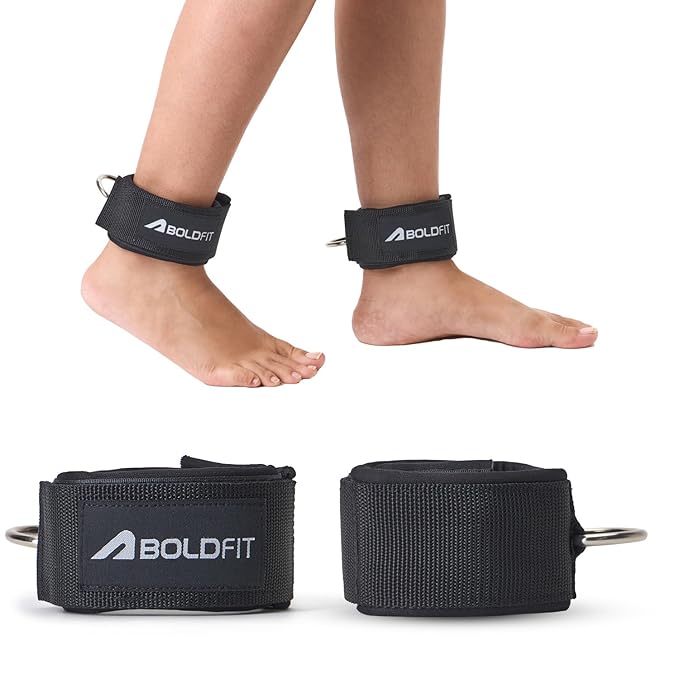
PREMIUM ANKLE STRAPS FOR CABLE MACHINES: Boldfit Ankle Straps strength training exercise are crafted with high-quality neoprene padding
Boldfit Ankle Straps For Gym With Metal D-rings Unisex Ankle Strap For Cable Machine Exercise Padded Ankle Bands For Leg Extensions, Kickback Ankle Gym Accessories For Men Workout Neoprene 1Pair Black
Original price was: ₹999.00.₹259.00Current price is: ₹259.00.
Description
About this item
strength training exercises
Strength Training Exercises: How Straps for Gym Can Maximize Your Performance
Mastering Strength Training Exercises with Straps for Gym: Expert Insights, Techniques, and Workouts
Strength training exercises are fundamental for anyone aiming to build muscle, enhance endurance, or improve athletic performance. However, maximizing these workouts often requires specialized equipment that helps support your body and ensures you can train effectively without risking injury. Among the most essential accessories are straps for gym, which are widely used but not always fully understood.
In this extended guide, we’ll dive deep into how straps for gym complement strength training exercises. You’ll learn advanced techniques, best practices, expert recommendations, and real-life testimonials that highlight how these tools have transformed the training routines of athletes and fitness enthusiasts alike.
⸻
Understanding the Role of Straps for Gym in Strength Training Exercises
While your muscles play the leading role in strength training exercises, your grip strength and joint stability can often be limiting factors. Straps for gym assist in reducing this limitation by providing additional support, allowing you to push your boundaries safely.
How Straps Help
✔ Improve grip endurance during exercises that require heavy lifting
✔ Offer joint stabilization, especially for wrists and forearms
✔ Enhance muscle engagement by reducing unnecessary tension
✔ Prevent injuries caused by slipping or poor form
✔ Encourage proper posture and controlled movements
⸻
The Science Behind Grip Fatigue and Muscle Activation
Grip fatigue occurs when the muscles in your forearms and hands tire before your larger muscle groups are fully engaged. This can happen during exercises like deadlifts, pull-ups, and rows. Straps for gym take over part of the gripping load, allowing your back, shoulders, and legs to perform the primary movements without interruption.
Muscle Activation Explained:
When grip strength is compromised, your nervous system signals to reduce load or stop the exercise to prevent injury. Using straps reduces this signal, allowing your muscles to reach their full capacity while the straps handle grip endurance.
⸻
Different Types of Straps for Gym and Their Impact on Workouts
1.Standard Lifting Straps
✔ Made from cotton, nylon, or synthetic blends
✔ Used in exercises requiring heavy lifts like deadlifts and rows
✔ Provide consistent grip support while lifting maximal loads
2.Wrist Wrap Straps
✔ Offer added support around the wrist
✔ Help in exercises like overhead presses and bench presses
✔ Prevent unnecessary wrist extension and strain
3.Figure-8 Straps
✔ Create a loop around both the wrist and bar
✔ Provide additional support during pulling exercises
✔ Ideal for beginners or rehabilitation purposes
4.Hook Straps
✔ Feature a metal hook for fast grip
✔ Used by competitive lifters aiming for maximal strength gains
✔ Ensure stability and safety during heavy lifts
Each strap type plays a unique role depending on the exercise, load, and training goal.
⸻
Advanced Techniques for Using Straps During Strength Training Exercises
Progressive Load Training with Straps
Gradually increasing the weight you lift over time is a proven method to enhance strength. Straps allow you to go heavier by minimizing grip interference, letting larger muscles work harder and more efficiently.
Example Plan:
•Weeks 1–4: Use straps only when grip fatigue begins
•Weeks 5–8: Incorporate straps for heavy sets above 85% of your max load
•Weeks 9–12: Combine strap-supported lifts with grip exercises to prevent over-reliance
⸻
Integrated Grip Workouts
For balanced development, grip exercises must accompany strap-supported lifts. Here’s how you can pair them:
✔ Farmer’s carry – Builds grip endurance
✔ Plate pinches – Strengthens fingertips
✔ Dead hangs – Improves grip resilience
✔ Wrist curls – Enhances wrist strength
✔ Grip squeezes – Improves muscle fiber recruitment
Combining these with strap usage ensures you develop both strength and stability.
⸻
Superset Workouts with Straps
Supersets combine two exercises to target multiple muscle groups or fatigue points in a single set. Straps enable you to push through fatigue without compromising safety.
Sample Superset:
•Deadlifts with lifting straps – 8 reps
•Pull-ups with wrist straps – 10 reps
•Repeat for 3–4 sets with minimal rest between exercises
This superset is ideal for building strength, endurance, and grip resilience.
⸻
Safety Tips to Avoid Overusing Straps
While straps enhance performance, misuse can lead to dependency or injury. Experts recommend the following:
✔ Avoid using straps for all exercises—reserve them for heavy lifts
✔ Incorporate grip-specific exercises in training cycles
✔ Practice proper technique before adding straps
✔ Do not wrap straps too tightly to prevent circulation issues
✔ Keep straps clean to avoid infections or skin irritation
⸻
Care and Maintenance of Straps for Gym
Proper maintenance extends the life of your straps and ensures hygiene during training.
Cleaning Tips:
✔ Wash with mild detergent after each use
✔ Air dry away from direct sunlight or high heat
✔ Store in a dry, ventilated area to prevent mold growth
Inspection Tips:
✔ Regularly check stitching and hooks for signs of wear
✔ Replace straps if material frays or stitching weakens
✔ Avoid using straps that show structural damage
⸻
How to Choose the Right Straps for Your Workout
Factors to Consider:
✔ Material – Cotton for comfort, nylon for durability, leather for longevity
✔ Padding – Extra cushioning improves comfort for longer sessions
✔ Adjustability – Helps tailor the strap fit to your wrist size
✔ Safety Features – Quick-release options prevent accidents during heavy lifts
✔ Breathability – Allows air circulation to reduce sweat accumulation
Expert Recommendation:
For heavy deadlifts, use thick lifting straps with reinforced stitching. For high-rep training, opt for padded straps that provide wrist comfort.
⸻
Real-Life Testimonials: How Straps Helped Athletes Overcome Plateaus
Priya, 31 – Powerlifter:
“Before using lifting straps, my grip failed before I completed my sets. Now, I can train heavier and recover faster without compromising form.”
Aditya, 27 – CrossFit Competitor:
“Wrist straps allowed me to maintain control during overhead lifts. I feel more confident pushing my limits safely.”
Neha, 24 – Rehabilitation Athlete:
“After a wrist injury, using figure-8 straps helped me regain strength gradually without discomfort.”
Ravi, 35 – Fitness Coach:
“Straps are a game-changer for clients who struggle with grip endurance. They help avoid premature fatigue and reduce injury risks.”
⸻
Frequently Asked Questions About Straps for Gym and Strength Training Exercises
Q1: Will using straps make my grip weaker over time?
✔ No, as long as you combine strap-supported lifts with grip-strength exercises.
Q2: Can beginners use straps safely?
✔ Yes, with proper technique and guidance. Straps support lifting without compromising safety.
Q3: How do I know if my strap is too tight?
✔ If your fingers go numb or the wrist feels compressed, loosen the strap immediately.
Q4: Should I use straps every time I train?
✔ No. Use them selectively during heavy sets and supplement with grip training.
Q5: How often should I replace my straps?
✔ Replace straps once you notice fraying, weakened stitching, or discomfort during use.
⸻
Sample Workouts Incorporating Straps for Gym
Beginner Routine (3 Days/Week)
Day 1:
•Deadlifts with lifting straps – 3 sets of 8 reps
•Pull-ups with wrist straps – 3 sets of 6 reps
•Plate pinches – 3 sets of 30 seconds
Day 2:
•Bench press with wrist straps – 3 sets of 10 reps
•Farmer’s carry – 4 rounds of 40 meters
•Wrist curls – 3 sets of 15 reps
Day 3:
•Barbell rows with lifting straps – 4 sets of 12 reps
•Overhead press with wrist straps – 3 sets of 8 reps
•Dead hangs – 3 rounds of 20 seconds
⸻
Intermediate Routine (4 Days/Week)
Day 1 – Pull Focus:
•Deadlifts – 4 sets of 8 reps
•Weighted pull-ups – 4 sets of 10 reps
•Forearm stretches and mobility drills
Day 2 – Push Focus:
•Overhead press – 4 sets of 10 reps
•Bench press – 4 sets of 8 reps
•Grip squeezes – 3 sets of 20 reps
Day 3 – Mixed Routine:
•Barbell rows – 4 sets of 12 reps
•Farmer’s carry – 3 rounds of 60 meters
•Wrist curls – 4 sets of 12 reps
Day 4 – Recovery and Stability:
•Bodyweight exercises without straps
•Light grip training
•Foam rolling and stretching
⸻
Conclusion
Straps for gym are indispensable tools that significantly enhance your strength training exercises. They support grip endurance, stabilize joints, and allow you to lift heavier without compromising form or safety. Whether you’re a beginner building strength or an advanced athlete pushing personal records, integrating straps into your workouts is a smart, strategic choice.
By selecting the right type of strap, maintaining it properly, and following expert guidelines, you ensure that your training remains efficient, injury-free, and sustainable. Pair strap-supported lifts with grip-strength exercises, listen to your body, and incorporate progressive techniques to maximize results.
With the right equipment and knowledge, your strength training exercises become more effective, safer, and rewarding. Train with purpose, recover mindfully, and let straps for gym help you unlock your full potential.
When it comes to building muscle, improving endurance, and pushing your limits, strength training exercises are essential. But behind every successful workout routine lies the right equipment—and among the most overlooked yet vital accessories are straps for gym. These small but powerful tools help enhance grip, prevent injuries, and enable you to lift heavier, train longer, and recover faster.
In this guide, we’ll explore how straps for gym complement your strength training exercises, improve your form, boost your lifting capacity, and support your fitness journey. From types of straps, how to use them, safety considerations, maintenance tips, and expert advice, this comprehensive article offers everything you need to know to make your workouts more effective and injury-free.
⸻
Why Straps for Gym Matter in Strength Training Exercises
Strength training exercises, whether you’re deadlifting, pulling, rowing, or gripping heavy weights, demand not just strength but endurance, stability, and proper technique. Without support, your grip or posture may weaken before your muscles fully engage, limiting the effectiveness of your training.
Key Benefits of Using Straps for Gym During Strength Training Exercises:
✔ Improved Grip Strength – Allows you to lift heavier without your grip failing
✔ Enhanced Performance – Supports muscles by stabilizing wrists and forearms
✔ Reduced Risk of Injury – Helps prevent strain on tendons, wrists, and joints
✔ Better Form – Encourages correct posture and alignment during lifts
✔ Extended Training Time – Allows longer, more focused sessions without premature fatigue
✔ Versatility – Useful across various exercises like deadlifts, pull-ups, and rows
✔ Support for Beginners – Enables safer lifting while building strength gradually
⸻
Types of Straps for Gym and Their Specific Uses in Strength Training Exercises
1. Lifting Straps
✔ Typically made from durable cotton, nylon, or leather
✔ Wrap around the wrist and barbell to enhance grip
✔ Ideal for exercises like deadlifts, shrugs, and barbell rows
✔ Supports wrists and reduces grip fatigue
Use Case: When your muscles are exhausted but you want to push through a final set
⸻
2. Wrist Straps
✔ Provides extra stability to the wrist during heavy lifts
✔ Helps prevent hyperextension and strain
✔ Best for overhead presses and bench presses
Use Case: Strength training exercises that require shoulder and wrist alignment
⸻
3. Figure-8 Straps
strength training exercise
✔ Offers additional support and stability
✔ Wraps around the wrist and bar in a secure loop
✔ Great for deadlifts and pulling exercises
Use Case: Beginners or those recovering from injuries needing extra grip support
⸻
4. Hook Straps
strength training exercise
✔ Includes metal hooks for quick grip reinforcement
✔ Perfect for lifting heavier weights without wrist strain
✔ Often used by powerlifters and advanced athletes
Use Case: Powerlifting or Olympic lifting when precision and stability are critical
⸻
How Straps for Gym Enhance Specific Strength Training Exercises
Deadlifts
Deadlifts are one of the most effective strength training exercises for building overall muscle mass. However, grip strength can often be the limiting factor in heavier sets. Using lifting straps helps you:
✔ Maintain grip during heavy pulls
✔ Engage larger muscle groups like glutes and hamstrings
✔ Avoid premature grip fatigue
⸻
Pull-Ups
Pull-ups require substantial upper-body and core strength, but weak grip strength can hold you back. With wrist straps:
✔ You can perform more repetitions
✔ Focus on back and shoulder muscles rather than grip
✔ Avoid soreness or tendon fatigue in forearms
⸻
Barbell Rows
Rows are fantastic for improving posture and strengthening the back. Straps help by:
✔ Allowing heavier lifts without compromising form
✔ Stabilizing wrists to prevent injuries
✔ Supporting sustained muscle engagement
⸻
Overhead Press
This exercise demands shoulder, upper back, and core strength. Wrist straps help:
✔ Stabilize wrists during lifts
✔ Avoid strain from unsteady movement
✔ Promote proper alignment and breathing technique
⸻
Shrugs
Shrugs target traps and shoulders but require strong grip endurance. With straps:
✔ You can perform multiple sets without grip failure
✔ Focus on trap activation rather than holding the barbell
✔ Reduce wrist fatigue and soreness after training
⸻
How to Properly Use Straps for Gym in Strength Training Exercises
Step-by-Step Guide for Lifting Straps strength training exercise
1.Wrap the strap around your wrist, keeping it snug but not too tight
2.Loop the free end around the barbell
3.Twist the strap once or twice to lock it in place
4.Hold the bar securely and perform the lift
5.Maintain control throughout the movement to avoid slipping
⸻
Step-by-Step Guide for Wrist Straps strength training exercise
1.Position the strap below the wrist bone for proper support
2.Secure it without cutting off circulation
3.Ensure alignment of the wrist and forearm
4.Avoid lifting heavier than you can safely control
⸻
Common Mistakes to Avoid strength training exercise
✔ Using straps to compensate for weak muscles instead of training gradually
✔ Wrapping straps too tightly and cutting off circulation
✔ Ignoring form and relying only on the strap
✔ Not maintaining equipment hygiene, leading to wear or infections
⸻
Expert Advice on Choosing the Right Straps for Gym strength training exercise
✔ Material Matters: Choose durable materials like high-quality cotton or nylon for longevity
✔ Adjustability: Ensure straps have enough flexibility and locking mechanisms for a secure fit
✔ Comfort: Padding around the wrist can prevent chafing during long sessions
✔ Specific Use: Match the strap type to the exercise you’re focusing on—deadlifts, pull-ups, etc.
✔ Test Before Heavy Use: Always practice with lighter weights before attempting maximum lifts
✔ Listen to Your Body: If you experience pain, reduce weight or avoid using straps temporarily
⸻
Safety Considerations When Using Straps for Gym in Strength Training Exercises
✔ Always warm up before using straps to prepare muscles and joints
✔ Avoid over-reliance—train grip strength without straps periodically
✔ Check straps for signs of wear, tear, or loose stitching before use
✔ Keep straps clean and dry to prevent bacteria buildup
✔ Avoid using damaged straps that compromise grip during heavy lifts
✔ Practice breathing techniques to maintain control throughout exercises
⸻
Maintenance Tips for Your Straps for Gym strength training exercise
✔ Wash cotton straps in cold water with mild detergent
✔ Air-dry straps instead of using dryers to maintain fabric integrity
✔ Store straps in a cool, dry place away from excessive moisture
✔ Regularly inspect hooks and stitching for damage
✔ Replace worn straps promptly to ensure safety during lifts
✔ Avoid leaving straps crumpled in gym bags to preserve shape
⸻
Real-Life Testimonials: How Straps for Gym Help Athletes Excel
Arjun, 29 – Powerlifter: strength training exercise
“Lifting straps transformed the way I train deadlifts. I can now focus on my form and increase my weight without worrying about my grip failing.”
Megha, 26 – Fitness Enthusiast: strength training exercise
“Wrist straps gave me the confidence to try new exercises without risking injury. They’ve become an essential part of my routine.”
Vikram, 34 – Personal Trainer: strength training exercise
“For clients recovering from minor wrist strains, using straps during strength training exercises allows them to rebuild strength safely.”
Nisha, 22 – Student Athlete:
“Before I used straps, I couldn’t perform more than a few pull-ups. Now, I’m hitting new personal records every week.”
⸻
Frequently Asked Questions (FAQs)
Q1: Do straps for gym replace grip training?
✔ No, straps enhance grip endurance but should be used in conjunction with exercises that build grip strength.
Q2: Can beginners safely use straps?
✔ Yes, as long as they follow correct wrapping techniques and use straps for exercises that require extra support.
Q3: How often should straps be used in strength training exercises?
✔ Use them during heavy lifts or fatigue phases, but also incorporate grip training without straps regularly.
Q4: What material is best for long-term use?
✔ High-quality cotton, nylon, or leather straps offer durability and comfort during extended workouts.
Q5: How do I prevent wrist injuries while using straps?
✔ Ensure straps are snug but not too tight, practice good form, and warm up before lifting.
⸻
Final Thoughts
Straps for gym are an indispensable accessory that complements strength training exercises by enhancing grip, stabilizing posture, and supporting heavier lifts. When used properly, they help you push through fatigue, reduce injury risks, and achieve better performance without compromising form.
Whether you’re a beginner building endurance or an advanced lifter aiming for new personal bests, gym straps are the perfect addition to your fitness toolkit. By choosing the right straps, using them correctly, and incorporating expert advice and safety practices, you’ll unlock your full potential in strength training exercises.
Invest in quality straps, maintain them with care, and train with purpose—because every lift counts, and every repetition takes you one step closer to achieving your fitness goals.
Reviews
There are no reviews yet.