

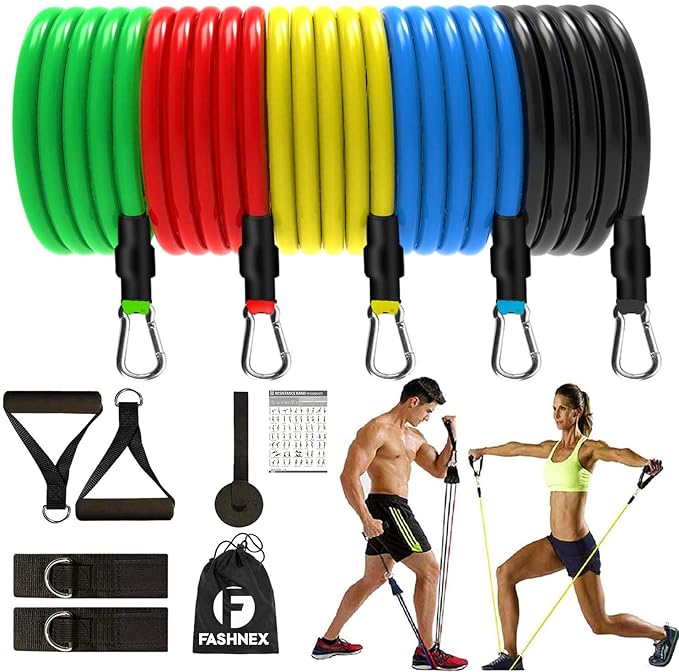
Resistance band exercises STACKABLE UPTO 100 LBS: 5 different colored resistant bands – Yellow (Very Light Resistance) , Green (Light)
Fashnex Resistance Bands Set for Exercise, Stretching and Workout Toning Tube Kit with Foam Handles, Door Anchor, Ankle Strap and Carry Bag for Men, Women
Original price was: ₹1,499.00.₹699.00Current price is: ₹699.00.
Description
Best Resistance Band Exercises – Transform Your Fitness Routine
Resistance bands are one of the most versatile, effective, and affordable tools for strength training, flexibility, and rehabilitation exercises. They are suitable for all fitness levels—from beginners to advanced athletes—and provide resistance without the need for heavy weights or gym equipment. In this guide, we will explore the best resistance band exercises, benefits, safety tips, and how to structure workouts for strength, mobility, and endurance Resistance band exercises.
Advanced Resistance Band Exercises to Push Your Limits Resistance band exercises
Once you master the basics, advanced resistance band exercises challenge your muscles in new ways. These workouts increase muscle activation, improve coordination, and help you break through plateaus.
1. Bulgarian Split Squat with Band Resistance band exercises
•Anchor the band at the bottom.
•Place one foot behind on a bench or chair.
•Lower into a lunge while keeping core tight.
•Works quads, glutes, and balance.
2. Resistance Band Chest Press Resistance band exercises
•Anchor the band behind you at chest level.
•Press handles forward while keeping elbows soft.
•Slowly release and repeat.
•Builds chest and shoulder strength.
3. Band-Resisted Pull-Ups Resistance band exercises
•Loop the band around a pull-up bar.
•Use it for assisted pull-ups to build back strength.
•Adjust the band’s resistance as needed.
4. Standing Band Rows
•Secure the band at waist level.
•Pull handles toward your waist while squeezing shoulder blades.
•Enhances posture and upper back strength.
5. Overhead Squat with Band
•Hold the band above your head with both hands.
•Squat deeply while maintaining shoulder alignment.
•Improves flexibility, core strength, and balance.
⸻
Resistance Band Workouts for Specific Fitness Goals
Weight Loss Plan
•Combine circuit training with resistance bands.
•Perform 3 rounds of:
1.Squats (20 reps)
2.Russian Twists (30 reps)
3.Band Rows (15 reps)
4.Lateral Walks (20 steps each side)
•Rest for 60 seconds between rounds.
Muscle Building Routine
•Focus on heavier band tension.
•Perform 4 sets of:
1.Deadlifts (12 reps)
2.Bicep Curls (12 reps)
3.Chest Fly (15 reps)
4.Tricep Extensions (15 reps)
•Rest for 90 seconds between sets.
Injury Recovery
•Use light therapy bands.
•Perform slow, controlled movements.
•Focus on flexibility and mobility exercises.
⸻
Resistance Band Workouts for Seniors
Aging shouldn’t mean giving up fitness. Resistance bands provide a gentle way to stay strong without stress on joints.
Sample Senior Routine
•Warm-up: 5 minutes of deep breathing and arm circles.
•Exercise:
1.Seated Leg Extensions – 2 sets of 10 reps
2.Standing Chest Press – 2 sets of 12 reps
3.Side Steps – 2 sets of 15 steps
4.Core Twists – 2 sets of 20 reps
•Cool down: Stretch and relax for 5 minutes.
This routine helps improve stability, bone health, and confidence in daily tasks.
⸻
How Resistance Bands Improve Athletic Performance
Athletes benefit from band training by developing strength, agility, and coordination.
Sports-Specific Benefits
•Running: Strengthens hip stabilizers for stride efficiency.
•Swimming: Enhances shoulder endurance and flexibility.
•Cycling: Builds quads, glutes, and core for power output.
•Tennis: Improves rotational strength and wrist flexibility.
Incorporate resistance bands into warm-up and cooldown sessions for optimal results.
⸻
How to Avoid Common Resistance Band Training Mistakes
Mistake 1: Using a Band Too Heavy or Too Light
•Solution: Start with medium tension and adjust as you progress.
Mistake 2: Overtraining Without Rest
•Solution: Allow 48 hours between intense workouts.
Mistake 3: Ignoring Proper Form
•Solution: Focus on slow, deliberate movements with controlled breathing.
Mistake 4: Skipping Warm-Up and Cooldown
•Solution: Prepare muscles with stretching and end with gentle movements to relax the body.
⸻
Combining Resistance Bands with Other Equipment
With Dumbbells
•Perform supersets alternating band and dumbbell exercises.
•Example: Band rows followed by dumbbell curls.
With Bodyweight Exercises
•Add bands to enhance push-ups or planks.
•Example: Push-ups with bands around the wrists for added resistance.
With Stability Balls
•Incorporate bands while balancing on a stability ball.
•Enhances core activation and balance.
⸻
How Resistance Bands Support Mental Health
Exercise routines involving resistance bands can boost mental well-being.
Stress Reduction
•Movement releases endorphins.
•Regular exercise improves mood.
Anxiety Relief
•Slow, mindful training sessions encourage focus and calmness.
Self-Efficacy
•Tracking progress fosters confidence.
•Achieving goals increases motivation.
⸻
Weekly Resistance Band Workout Plan
Monday – Lower Body Focus
•Squats – 3 sets of 20 reps
•Side Steps – 3 sets of 15 steps
•Glute Bridges – 3 sets of 15 reps
Tuesday – Upper Body Focus
•Shoulder Press – 3 sets of 15 reps
•Bicep Curls – 3 sets of 15 reps
•Chest Fly – 3 sets of 20 reps
Wednesday – Core and Flexibility
•Plank Pulls – 3 sets of 20 reps
•Russian Twists – 3 sets of 30 reps
•Seated Forward Stretch – 5 minutes
Thursday – Active Recovery
•Gentle band stretching
•Deep breathing exercises
•Light mobility drills
Friday – Full Body
•Deadlifts – 4 sets of 12 reps
•Lateral Walks – 3 sets of 20 steps
•Overhead Squat – 3 sets of 15 reps
Saturday – Endurance Training
•Circuit style with 5 exercises, 20 reps each
•Repeat for 3 rounds
Sunday – Rest and Relaxation
•Gentle stretching
•Meditation or yoga
⸻
How to Store and Care for Resistance Bands
•Keep bands away from sharp objects.
•Store in a cool, dry place to prevent wear.
•Clean with mild soap and water.
•Check for cracks or tears before each use.
•Replace damaged bands to avoid injury.
⸻
Conclusion
Resistance band exercises are a must-have for anyone looking to build strength, improve flexibility, or recover from injuries. They offer unmatched versatility, portability, and effectiveness for all fitness levels. From beginners to seasoned athletes, incorporating resistance bands into your routine promotes holistic health, endurance, and mental resilience.
By following structured workouts, practicing proper form, and balancing effort with recovery, you can maximize the benefits of resistance training safely and enjoyably.
Start today with resistance bands and unlock your body’s potential!
⸻
Why Resistance Band Exercises Are Effective
Resistance bands offer variable tension during movement, engaging muscles in both concentric and eccentric phases.
Benefits:
•Portable and Affordable: Easily used at home, in the office, or while traveling.
•Joint-Friendly: Provides resistance without heavy impact on joints.
•Improves Flexibility: Assists in stretching and improving range of motion.
•Enhances Muscle Activation: Works multiple muscle groups simultaneously.
•Adaptable for All Levels: Adjust tension based on the band’s strength.
Whether you’re recovering from an injury or looking to boost performance, resistance bands are a game-changer.
⸻
Types of Resistance Bands
Loop Bands
•Circular bands often used for lower-body exercises.
•Great for glutes, hips, and thighs.
Tube Bands with Handles
•Versatile for upper-body, core, and full-body exercises.
•Provides strong resistance for heavier workouts.
Therapy Bands
•Light tension for stretching and rehabilitation.
•Used by physiotherapists and beginners.
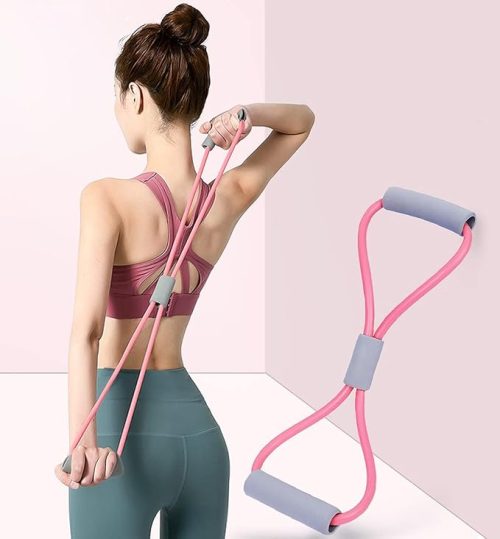
Figure-8 Bands
•Ideal for upper-body and shoulder workouts.
•Helps with posture and mobility training.
⸻
Top Resistance Band Exercises by Muscle Group
Lower Body
1. Squat with Band
•Loop the band around your thighs.
•Perform squats, keeping knees aligned.
•Activates glutes and thighs.
2. Glute Bridges
•Place the band above knees.
•Lie on your back, feet flat, and lift hips upward.
•Focuses on glutes and hamstrings.
3. Side Leg Lifts
•Attach the band around ankles.
•Lift one leg sideways while maintaining balance.
•Strengthens hip abductors and stabilizers.
Upper Body
4. Shoulder Press
•Hold handles and press overhead.
•Keep core engaged and shoulders steady.
•Builds shoulder strength.
5. Bicep Curls
•Stand on the band and curl hands toward shoulders.
•Avoid swinging; control movement.
•Targets biceps.
6. Tricep Extensions
•Anchor the band behind you and extend arms forward.
•Keep elbows locked.
•Works triceps.
Core Exercises
7. Seated Russian Twists
•Sit with legs bent, band stretched between hands.
•Twist from side to side.
•Engages obliques and core muscles.
8. Plank Pulls
•In plank position, hold the band with both hands.
•Pull the band sideways while maintaining posture.
•Builds core strength.
9. Bicycle Crunch with Band
•Wrap the band around feet.
•Perform alternating crunches.
•Targets abs and hip flexors.
Full Body
10. Deadlifts with Band
•Stand on the band, hold handles, and perform deadlift movement.
•Keep back straight and chest up.
•Works hamstrings, back, and core.
11. Chest Fly
•Anchor the band behind you and bring hands together in front.
•Focus on squeezing chest muscles.
•Enhances upper body strength.
12. Lateral Band Walks
•Loop the band around thighs and take sideways steps.
•Keep hips low and knees bent.
•Builds glute and hip strength.
⸻
Structuring Your Resistance Band Workout
Beginner Routine
•Warm-up: 5 minutes of light stretching.
•Workout: Perform 2 sets of 12-15 reps for each exercise.
•Rest: 60 seconds between sets.
•Focus on learning proper form and breathing techniques.
Intermediate Routine
•Warm-up: 10 minutes of dynamic stretching.
•Workout: 3 sets of 15-20 reps.
•Add tempo variation—3 seconds lowering, 1 second lifting.
•Rest for 30–45 seconds between sets.
Advanced Routine
•Warm-up: 10 minutes with mobility drills.
•Workout: 4 sets of 20+ reps or until fatigue.
•Incorporate supersets and circuits.
•Track progress by increasing band resistance.
⸻
How Resistance Band Exercises Aid Recovery
Resistance bands are widely used in rehabilitation programs for injuries.
Why They Help:
•Controlled tension supports joints and ligaments.
•Encourages slow, mindful movements.
•Assists in regaining muscle strength post-injury.
•Allows for gradual progression.
Always consult a physiotherapist before starting rehabilitation exercises.
⸻
Safety Tips for Resistance Band Training
1.Check for Wear and Tear: Inspect the band before each session.
2.Anchor Securely: Use doors or equipment that won’t slip.
3.Maintain Form: Avoid jerky movements.
4.Start Light: Progress gradually to avoid muscle strain.
5.Breathe Properly: Exhale during exertion and inhale during release.
Following safety protocols prevents injuries and maximizes results.
⸻
Resistance Bands vs. Free Weights
Resistance Bands
•Lightweight and portable.
•Allows for constant tension.
•Safer for joints and beginners.
•Effective for endurance and rehabilitation.
Free Weights
•Provides heavier resistance.
•Builds maximal strength.
•Requires more space and equipment.
•Higher injury risk if form isn’t maintained.
Combining both tools enhances overall training effectiveness.
⸻
Nutrition for Resistance Band Training
Pairing proper nutrition with band exercises supports muscle recovery and energy.
Before Workout
•Eat a light snack like fruit or yogurt.
•Hydrate with water or electrolyte drinks.
After Workout
•Focus on protein-rich meals (e.g., chicken, tofu, or beans).
•Include carbohydrates like quinoa or sweet potatoes.
•Replenish fluids.
Consistency in diet helps muscles repair and grow.
⸻
Incorporating Resistance Band Exercises Into Daily Life
1.Morning Stretch Routine: Use therapy bands for mobility.
2.Desk Breaks: Perform seated band pull-aparts.
3.Travel-Friendly: Carry loop bands in your bag.
4.Weekend Workouts: Pair band exercises with bodyweight routines.
Integrating these exercises makes fitness accessible anytime.
Expert Tips to Maximize Resistance Band Workouts
For those serious about improving fitness, expert advice can take your training to the next level. Here are proven strategies used by trainers and physiotherapists alike.
1. Warm Up Thoroughly
A proper warm-up prepares your muscles and joints for resistance training. Perform light cardio such as jogging in place or jumping jacks for 5 minutes. Follow it with dynamic stretches targeting the muscles you plan to work.
2. Focus on Breathing
Breathing plays a crucial role in maximizing exercise efficiency. Exhale during exertion, such as when lifting or pressing, and inhale during the relaxation phase. This technique helps you maintain endurance and prevents fatigue.
3. Use Full Range of Motion
Stretching and contracting muscles fully during each repetition ensures balanced strength development. Avoid cutting short or rushing through movements, as this reduces effectiveness.
4. Incorporate Progressive Overload
As your body adapts, you need to challenge your muscles more. Increase resistance by switching to heavier bands, adding sets, or performing exercises at a slower pace to extend muscle engagement.
5. Balance Training with Recovery
While consistency is key, recovery helps muscles rebuild and grow stronger. Include rest days and sleep well to enhance performance.
⸻
Resistance Band Workouts for Travel Resistance band exercises
Travel can interrupt fitness routines, but resistance bands offer a practical solution. Their portability allows you to train wherever you are.
Essential Travel Routine
•Pack loop and tube bands in your luggage.
•Perform bodyweight exercises with added resistance.
•Spend 20–30 minutes daily to stay active.
•Focus on mobility drills and strength-building exercises.
Exercises to Include While Traveling Resistance band exercises
1.Squats with loop bands
2.Shoulder press using tube bands anchored at doors
3.Seated core twists with bands
4.Glute bridges on hotel beds
5.Stretching for lower back and hamstrings
Even in limited spaces, consistent training prevents muscle loss and maintains flexibility.
⸻
Using Resistance Bands for Posture Improvement Resistance band exercises
Poor posture leads to discomfort, muscle imbalance, and long-term health issues. Resistance bands help by strengthening postural muscles and encouraging proper alignment.
Key Exercises Resistance band exercises
•Band Pull-Aparts: Strengthens upper back muscles.
•Face Pulls: Encourages shoulder alignment.
•Chest Opener Stretches: Loosens tight chest muscles.
•Wall Slides with Bands: Improves shoulder mobility.
Perform these exercises daily to gradually realign your posture and relieve tension.
⸻
How to Combine Resistance Bands with Other Forms of Exercise
Yoga
•Add bands to poses like Warrior II or Downward Dog.
•Helps deepen stretches and engage stabilizers.
Pilates
•Resistance bands enhance core strength routines.
•Focus on slow, controlled movements for muscle endurance.
Cardio
•Incorporate bands into interval training.
•Alternate between jumping jacks and band squats for a high-intensity workout.
Weightlifting
•Use bands for warm-ups before heavy lifting.
•Activate muscles and reduce risk of injury.
⸻
Resistance Bands for Group Workouts
Training with friends or in group classes can be fun and motivating. Resistance bands allow for scalable intensity across fitness levels.
Group Circuit Example
•Station 1: Band squats – 20 reps
•Station 2: Shoulder press – 15 reps
•Station 3: Plank pull – 20 reps
•Station 4: Seated core twist – 25 reps
Rotate every 60 seconds for 3 rounds. This format promotes camaraderie and keeps energy levels high.
Resistance band exercises
Resistance Band Training for Kids and Teens
Starting early helps children build healthy exercise habits without the strain of heavy weights.
Benefits for Young Athletes
•Supports growth-friendly movements.
•Encourages coordination and body awareness.
•Reduces risk of joint injury.
Sample Routine
•Band-resisted squats – 2 sets of 15 reps
•Arm circles with bands – 2 sets of 20 reps
•Core twists – 2 sets of 20 reps
Always supervise proper form and avoid overtraining.
Resistance band exercises
Frequently Asked Questions About Resistance Band Exercises
Q1: Can resistance bands replace weights?
They complement strength training but don’t fully replace heavy weights for advanced lifters.
Q2: How often should I train with bands?
3–5 days per week depending on your fitness level and goals.
Q3: Which resistance band is best?
Start with a medium-tension band and adjust as your strength increases.
Q4: Can resistance bands be used for injury recovery?
Yes, therapy bands offer gentle support for stretching and rebuilding muscles after injury.
Q5: How do I prevent bands from snapping?
Inspect them before use, avoid overstretching, and store them properly.
Resistance band exercises
Incorporating Mindfulness in Resistance Band Workouts
Training is not just physical—it’s a mental practice. Incorporating mindfulness into your routine helps improve focus, reduce anxiety, and enhance overall well-being.
Tips to Practice Mindfulness
•Slow down movements to feel every muscle engage.
•Focus on breathing patterns throughout the exercise.
•Observe body alignment and adjust posture accordingly.
•Set small, achievable goals for each session.
Mindfulness helps you listen to your body and prevents overexertion.
⸻
Conclusion Resistance band exercises
Resistance band exercises offer limitless opportunities to build strength, improve flexibility, recover from injuries, and enhance athletic performance. From beginners to elite athletes, these bands provide a safe, effective, and portable way to train anytime, anywhere.
By incorporating proper form, progressive overload, and mindful practice, you can unlock your body’s full potential. Whether at home, traveling, or in group workouts, resistance bands are your trusted fitness companion.
Embrace consistency, focus on technique, and enjoy the journey toward a stronger, healthier you!
⸻
Real Success Stories Resistance band exercises
“I started with therapy bands after a shoulder injury, and in 6 weeks, I regained full motion.” – Nisha, 29
“Resistance bands helped me train at home while traveling, and I didn’t miss a session in months.” – Rahul, 34
“Using bands added variety to my workouts and made training fun again.” – Priya, 26
⸻
Final Thoughts
Resistance band exercises are a powerful way to build strength, improve mobility, and prevent injuries. They’re suitable for all fitness levels and offer convenience, affordability, and effectiveness.
Whether you’re a beginner looking to ease into fitness or an advanced athlete seeking new challenges, incorporating resistance bands into your routine provides endless possibilities.
Stay consistent, train safely, and enjoy the journey to a stronger, healthier you!
Reviews
There are no reviews yet.