

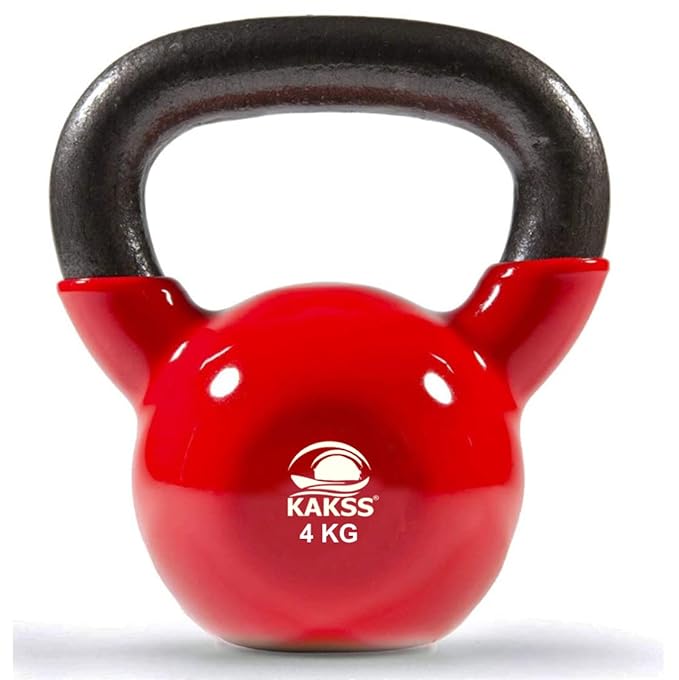
Enhance your strength training with our durable bell for gym. Built for performance and safety, it is perfect for squats, presses, swings, and deadlifts.
Kakss Vinyl half coating Kettle Bell for Gym & Workout (Proudly Made in India) (4Kg Red)
Original price was: ₹1,599.00.₹949.00Current price is: ₹949.00.
Description
Product information
Bell for gym
The Power of the Bell for Gym: A Must-Have Weight Lifting Equipment
When it comes to strength training and full-body conditioning, the bell for gym—more commonly known as the kettlebell—is one of the most versatile and effective pieces of weight lifting equipment you can invest in. From functional movements to explosive power exercises, kettlebells offer a unique combination of resistance, stability training, and endurance work, making them a staple in modern gyms and home workout spaces alike.
Whether you’re a beginner exploring basic movements or an athlete refining your explosive strength, the bell for gym is an essential tool that delivers results while challenging multiple muscle groups at once. This guide will walk you through the benefits, usage techniques, common mistakes, safety tips, and maintenance practices associated with kettlebells, helping you integrate them seamlessly into your fitness routine.The swing is the foundation of many kettlebell workouts. It builds explosive power by engaging your hips, glutes, and lower back. Start with your feet shoulder-width apart, hinge at the hips, and swing the kettlebell to shoulder height. Focus on using your glutes to power the movement rather than pulling with your arms.
Goblet Squat
Holding the kettlebell close to your chest, perform squats with your feet slightly wider than hip-width. Keep your chest up and lower until your thighs are parallel to the floor. This move strengthens your legs and core while improving posture.
Turkish Get-Up
This full-body exercise improves stability and mobility. Start lying on the floor with one arm holding the kettlebell above you. Slowly rise into a standing position while keeping the weight controlled. The movement trains balance and builds resilience in both shoulders and hips.
Clean and Press
This compound movement combines power and stability. Swing the kettlebell up to your shoulder, then press it overhead. Return to the starting position slowly, controlling every phase of the movement.
Mental Training: How to Stay Focused and Motivated
Working with kettlebells requires not only physical effort but also mental toughness. Incorporating strategies to stay consistent ensures long-term success.
Visualization Techniques
Before beginning a workout, visualize each movement. Picture how your hips extend, how your arms lock out, and how your breath supports the movement.
Tracking Performance
Maintain a training log to record sets, reps, and how you feel after each session. Seeing improvements reinforces motivation.
Challenge Yourself with Milestones
Set realistic and measurable goals:
✔ Increase swing count by 5 reps weekly.
✔ Improve form in complex exercises before adding weight.
✔ Master advanced exercises like the Turkish get-up progressively.
⸻
Injury Prevention Strategies When Using the Bell for Gym
1. Always Warm Up
A proper warm-up improves circulation and prepares muscles for heavy loads.
Suggested Warm-Up Sequence:
•5 minutes of light cardio
•Shoulder circles and stretches
•Hip mobility drills
•Core activation exercises
2. Focus on Controlled Movements
Explosive exercises are beneficial but must be performed with control to avoid unnecessary strain.
Key Movement Cues:
✔ Keep the core tight during swings.
✔ Avoid hyperextension of the spine during overhead lifts.
✔ Ensure smooth transitions in complex sequences.
When it comes to strength training and full-body conditioning, the bell for gym—more commonly known as the kettlebell—is one of the most versatile and effective pieces of weight lifting equipment you can invest in. From functional movements to explosive power exercises, kettlebells offer a unique combination of resistance, stability training, and endurance work, making them a staple in modern gyms and home workout spaces alike.
Whether you’re a beginner exploring basic movements or an athlete refining your explosive strength, the bell for gym is an essential tool that delivers results while challenging multiple muscle groups at once. This guide will walk you through the benefits, usage techniques, common mistakes, safety tips, and maintenance practices associated with kettlebells, helping you integrate them seamlessly into your fitness routine.
3. Avoid Overtraining
Rest days allow muscles to recover and prevent chronic injuries.
Signs You May Be Overtraining:
•Persistent soreness
•Fatigue and low motivation
•Difficulty sleeping
•Reduced performance
Fixes:
•Alternate heavy days with mobility or recovery sessions.
•Adjust volume and intensity based on how you feel.
⸻
Nutrition Tips to Support Kettlebell Training
Strength training with kettlebells increases calorie expenditure and muscle breakdown, making nutrition a critical component of recovery and performance.
Macronutrient Guidelines
✔ Protein – Supports muscle repair. Aim for 1.6–2.2 grams per kilogram of body weight daily.
✔ Carbohydrates – Replenishes energy stores, especially after high-intensity workouts.
✔ Fats – Supports hormonal health and provides long-lasting energy.
Hydration
Drinking water before, during, and after training prevents cramps and fatigue. Aim for at least 2–3 liters daily.
Recovery Nutrition
Post-workout meals should be balanced with protein and complex carbs within 30–60 minutes after exercise.
Example Recovery Snack:
•Grilled chicken breast
•Brown rice or sweet potatoes
•Steamed vegetables
⸻
Choosing Between Different Types of Bells for Gym
Not all kettlebells are created equal. Understanding the differences helps you pick the right one for your goals.
⸻
What Makes the Bell for Gym So Special?
Unlike traditional dumbbells or barbells, the kettlebell’s off-center weight design demands greater control, coordination, and stability from your muscles. Every movement requires not just strength but also balance, mobility, and core engagement.
Unique Benefits of the Bell for Gym
✔ Full-Body Activation – The dynamic movements required when lifting or swinging the kettlebell engage multiple muscle groups simultaneously.
✔ Core Strength and Stability – Exercises like kettlebell swings force your core to work hard to stabilize your spine, improving posture and balance.
✔ Explosive Power – Movements such as cleans, snatches, and swings enhance fast-twitch muscle fibers, increasing athletic performance.
✔ Joint-Friendly Design – Unlike barbell movements that place strain on joints, kettlebell exercises encourage natural movement patterns and reduce the risk of overuse injuries.
✔ Versatility – From strength-building exercises to cardio circuits and flexibility drills, the bell for gym fits every fitness goal.
⸻
Anatomy of the Bell for Gym
A typical kettlebell is a cast-iron or steel weight with a curved handle attached to a rounded or flat base. The design allows for gripping from multiple angles, making it suitable for varied movements.
Key Features:
•Handle Width – Wide enough to accommodate both hands for exercises like swings or goblet squats.
•Material – Durable cast iron, stainless steel, or coated metal for longevity and grip.
•Weight Variations – Starting from 4 kg for beginners and going up to 48 kg or more for advanced training.
•Base Design – Flat-bottomed for stability during exercises like windmills or Turkish get-ups.
⸻
Top Exercises Using the Bell for Gym
1. Kettlebell Swing
Muscles Targeted: Glutes, hamstrings, lower back, core
How to Perform:
1.Stand with feet shoulder-width apart, kettlebell between legs.
2.Hinge at the hips, keeping the back flat.
3.Drive through the hips to swing the kettlebell up to shoulder height.
4.Control the descent and repeat.
Benefits:
•Builds posterior chain strength.
•Enhances explosive power.
•Improves cardiovascular endurance.
Key Features:
•Handle Width – Wide enough to accommodate both hands for exercises like swings or goblet squats.
•Material – Durable cast iron, stainless steel, or coated metal for longevity and grip.
•Weight Variations – Starting from 4 kg for beginners and going up to 48 kg or more for advanced training.
•Base Design – Flat-bottomed for stability during exercises like windmills or Turkish get-ups.
⸻
2. Goblet Squat
Muscles Targeted: Quadriceps, glutes, core
How to Perform:
1.Hold the kettlebell close to your chest with both hands.
2.Squat down until your thighs are parallel to the ground.
3.Keep the chest up and core tight throughout the movement.
4.Drive through the heels to return to standing.
Benefits:
•Develops lower-body strength.
•Encourages proper squat mechanics.
•Reduces strain on the knees compared to barbell squats.
⸻
3. Kettlebell Deadlift
Muscles Targeted: Glutes, hamstrings, back
How to Perform:
1.Place the kettlebell between your feet.
2.Hinge at the hips and grip the handle firmly.
3.Drive through your legs, keeping the chest lifted as you stand upright.
4.Slowly lower the kettlebell back to the ground.
Benefits:
•Strengthens the posterior chain.
•Builds proper hip hinge mechanics.
•Prepares you for heavier lifts safely.
⸻
4. Turkish Get-Up
Muscles Targeted: Shoulders, core, hips, legs
How to Perform:
1.Lie on the floor holding the kettlebell above you with one arm extended.
2.Roll onto your side and prop yourself up on your elbow.
3.Move into a standing position while keeping the kettlebell lifted overhead.
4.Reverse the steps to return to the floor.
Benefits:
•Enhances shoulder stability and mobility.
•Develops full-body coordination.
•Builds resilience in weak areas.
⸻
5. Kettlebell Clean and Press
Muscles Targeted: Shoulders, back, core, legs
How to Perform:
1.Perform a clean by swinging the kettlebell up to the shoulder.
2.Press the kettlebell overhead, locking out the elbow.
3.Lower the kettlebell back to the shoulder and repeat.
Benefits:
•Builds explosive strength.
•Improves grip and shoulder endurance.
•Works multiple muscle groups efficiently.
Common Mistakes When Training with the Bell for Gym
Even with proper technique, there are common errors that hinder progress or increase injury risk.
1. Relying Too Much on Arm Strength
The swing is a hip-driven movement, but many people mistakenly pull with their arms.
Fix: Focus on hinging at the hips and driving the movement from your glutes and core.
⸻
2. Rounding the Back
Poor posture leads to unnecessary strain on the spine.
Fix: Keep your chest up and shoulders back while maintaining a neutral spine.
⸻
3. Using Excessive Weight Too Soon
Heavy bells force compensatory movements and poor form.
Fix: Start with a lighter weight and master technique before progressing.
When it comes to strength training and full-body conditioning, the bell for gym—more commonly known as the kettlebell—is one of the most versatile and effective pieces of weight lifting equipment you can invest in. From functional movements to explosive power exercises, kettlebells offer a unique combination of resistance, stability training, and endurance work, making them a staple in modern gyms and home workout spaces alike.
Whether you’re a beginner exploring basic movements or an athlete refining your explosive strength, the bell for gym is an essential tool that delivers results while challenging multiple muscle groups at once. This guide will walk you through the benefits, usage techniques, common mistakes, safety tips, and maintenance practices associated with kettlebells, helping you integrate them seamlessly into your fitness routine.
⸻
4. Neglecting Warm-Up
Jumping into kettlebell training without proper preparation can lead to injuries.
Fix: Incorporate mobility drills and dynamic stretches before your workout.
⸻
5. Not Engaging the Core bell for gym
The bell for gym, or kettlebell, is one of the most effective and versatile pieces of weight lifting equipment. It’s not just a weight—it’s a tool that improves strength, endurance, coordination, and mobility. Whether you train at home or in a professional gym, kettlebell exercises offer functional benefits that go beyond simple muscle-building.
Kettlebells are unique because of their off-center weight. This forces your body to engage more muscles during every exercise. Movements like swings or presses challenge not just your arms or legs, but your core and posture as well.
For beginners, kettlebells are a great introduction to strength training. For advanced lifters, they add intensity, improve explosive power, and enhance stability. This guide explains how to use kettlebells safely, program workouts, and get the best results.
⸻
Why Choose the Bell for Gym?
Unlike dumbbells or barbells, the kettlebell’s design encourages natural movement patterns. It also strengthens muscles that aren’t always targeted by traditional lifts. For example, exercises like swings build glute and hamstring strength while improving coordination between the upper and lower body.
Another advantage is joint safety. Because kettlebell exercises are dynamic but controlled, they reduce the risk of injury compared to heavy lifts that place unnecessary stress on joints.
Finally, kettlebells are space-saving and cost-effective. A few kettlebells can replace larger, more expensive gym machines while offering a wider range of exercises.
⸻
Top Benefits of Using a Kettlebell
✔ Full-Body Engagement – Every exercise recruits multiple muscles, improving overall strength.
✔ Core Activation – Movements like the swing or Turkish get-up challenge your abdominal muscles.
✔ Functional Training – The kettlebell trains movements used in everyday life and sports.
✔ Joint-Friendly Workouts – Smooth, controlled exercises reduce strain on shoulders and knees.
✔ Improves Balance and Coordination – The off-center design forces you to stabilize through multiple planes of motion.
⸻
Key Exercises with the Bell for Gym
Kettlebell Swing
The swing is the foundation of many kettlebell workouts. It builds explosive power by engaging your hips, glutes, and lower back. Start with your feet shoulder-width apart, hinge at the hips, and swing the kettlebell to shoulder height. Focus on using your glutes to power the movement rather than pulling with your arms.
Goblet Squat
Holding the kettlebell close to your chest, perform squats with your feet slightly wider than hip-width. Keep your chest up and lower until your thighs are parallel to the floor. This move strengthens your legs and core while improving posture.
Turkish Get-Up
This full-body exercise improves stability and mobility. Start lying on the floor with one arm holding the kettlebell above you. Slowly rise into a standing position while keeping the weight controlled. The movement trains balance and builds resilience in both shoulders and hips.
Clean and Press
This compound movement combines power and stability. Swing the kettlebell up to your shoulder, then press it overhead. Return to the starting position slowly, controlling every phase of the movement.
A weak core makes it hard to stabilize during dynamic movements.
Fix: Practice breathing techniques and core-focused drills like planks or hollow holds.
⸻
Safety Tips for Using the Bell for Gym
✔ Always perform exercises on a flat, stable surface.
✔ Maintain a controlled tempo, avoiding jerky or uncontrolled swings.
✔ Keep your shoulders engaged and avoid shrugging during lifts.
✔ Use chalk or grip-enhancing gloves if hands get sweaty.
✔ Consult with a certified trainer if you’re new to kettlebell movements.
⸻
Maintaining Your Bell for Gym
Proper maintenance extends the life of your kettlebell and ensures safety.
Cleaning Routine
•Wipe down with a damp cloth after each session.
•Use a mild soap solution for deeper cleaning when needed.
•Dry completely to avoid rust or corrosion.
Storage
•Store in a dry, ventilated area.
•Avoid stacking heavy objects on top of the kettlebell.
•Keep out of reach of children to prevent accidents.
⸻
Incorporating the Bell for Gym into a Balanced Training Plan
A well-rounded program includes kettlebell training along with other weight lifting equipment such as barbells, dumbbells, and cable machines. Here’s how to structure a week’s routine:
Example 3-Day Kettlebell Program
Day 1 – Strength
•Kettlebell Deadlift – 4 sets of 8 reps
•Goblet Squat – 3 sets of 12 reps
•Turkish Get-Up – 3 sets of 5 reps per side
Day 2 – Conditioning
•Kettlebell Swing – 5 sets of 20 reps
•Clean and Press – 3 sets of 10 reps per side
•Farmer’s Carry – 3 sets of 40 meters
Day 3 – Mobility & Recovery
•Windmill Stretch – 3 sets of 10 reps per side
•Hip Hinge Drill – 4 sets of 12 reps
•Shoulder Rotations – 3 sets of 15 reps
⸻
Final Thoughts
The bell for gym is an indispensable tool in any fitness arsenal, offering dynamic resistance, functional movement patterns, and full-body engagement. As a cornerstone of effective weight lifting equipment, kettlebells provide strength gains, posture correction, mobility enhancement, and injury prevention, making them suitable for everyone from beginners to professional athletes.
By choosing the right kettlebell, mastering proper technique, and integrating it into a balanced training plan, you’ll build strength, resilience, and confidence. Train with intention, challenge yourself progressively, and enjoy the transformative power of kettlebell workouts.
Start today with the right bell for gym—and lift, swing, and strengthen your way to peak performance.
⸻
How to Choose the Right Bell for Gym
Selecting the correct kettlebell depends on your fitness level, training goals, and available space.
Reviews
There are no reviews yet.