

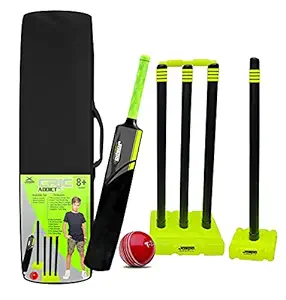
A bat for cricket bat is more than just a piece of equipment; it is an extension of the batsman’s skill and technique
Jaspo CRIC Addict Plastic Cricket Bat Set Combo with Soft Cricket Ball for Kids (Size-5 (8 yrs to 12 yrs))
Original price was: ₹1,499.00.₹999.00Current price is: ₹999.00.
Description
Bat for Cricket – The Ultimate Guide for Beginners to Professionals
A cricket bat is the most important piece of equipment for a batsman. The right bat enhances performance, improves shot accuracy, and provides comfort during long innings. Whether you are a beginner or a professional, choosing the correct bat for cricket is crucial to ensure both performance and safety.
Bat for cricket From junior players to seasoned cricketers, understanding the types, materials, grip, and maintenance of a cricket bat helps improve your game. A well-balanced bat allows for powerful shots, better control, and overall confidence at the crease.
Historical Evolution of Cricket Bats
Bat for cricket have undergone significant evolution over centuries:
•18th Century: Early bats resembled hockey sticks, curved to play along the ground.
•19th Century: Flat-faced bats emerged, designed for air-play shots.
•20th Century: Standardization in size and weight; introduction of English willow as the premium choice.
•Modern Era: Advanced engineering with ergonomic handles, thicker edges, and shock-absorbing materials.
Understanding history helps appreciate how modern bats are optimized for power, control, and versatility.
⸻
Anatomy of a bat for cricket
Bat for cricket consists of several parts:
1.Blade: The main hitting surface; thickness and shape affect power and control.
2.Sweet Spot: The ideal area for striking the ball; larger sweet spots allow more forgiveness in timing.
3.Edges: Thicker edges increase hitting potential and durability.
4.Handle: Made of cane or composite materials; absorbs shock and allows flexibility.
5.Toe: The lower part of the bat; reinforced toes prevent damage during full-length deliveries.
6.Spine: The central part of the blade; higher spines increase rebound and power.
Each component affects overall performance, requiring players to choose carefully based on skill level and style.
⸻
Advanced Batting Techniques bat for cricket
1. Backlift and Downswing
•A high backlift generates more power in drives.
•Proper downswing ensures maximum contact at the sweet spot.
2. Footwork and Positioning
•Correct foot placement allows playing straight, cut, and pull shots effectively.
•Combines with bat movement for better balance and timing.
3. Shot Selection
•Defensive shots protect the wicket.
•Attacking shots maximize scoring opportunities.
4. One-Handed Control Drills
•Improves reflexes and wrist strength.
•Useful for fine control in close-in shots and defensive strokes.
5. Power Hitting Techniques
•Adjusting grip for horizontal bat shots like pulls and sweeps.
•Using the full length of the blade to strike hard on lofted shots.
⸻
Choosing the Right Bat for Different Formats
Test Matches
•Slightly heavier bats for controlled, defensive, and attacking shots.
•Larger sweet spots for long innings.
One-Day Internationals (ODIs)
•Medium-weight bats for balance between power and agility.
•Shorter blade for quicker shots and rotation of strike.
T20 Matches
•Lightweight bats for fast swings and innovative shots.
•Emphasis on sweet spot for power hitting.
Indoor or Practice Matches
•Durable training bats, often Kashmir willow, are preferred.
•Focus on longevity and easy maintenance rather than peak performance.
⸻
Customizing Your Cricket Bat
Professional cricketers often customize bats for comfort and performance:
•Handle Grip: Choose oval or round based on personal preference.
•Weight Adjustment: Slight modifications to improve swing speed.
•Toe Guard: Protects against water damage and toe cracks.
•Edge Reinforcements: Strengthens the edges for aggressive hitting.
•Brand Customization: Logos, colors, and personal markings.
Customizations enhance comfort and help players feel confident at the crease.
⸻
Training with a Cricket Bat
1. Strength and Conditioning
•Focus on forearm, wrist, and core exercises to handle bat weight.
•Helps improve shot power and reduce fatigue.
2. Shadow Batting
•Practicing without a ball to perfect swings and footwork.
•Enhances muscle memory and precision.
3. Net Practice
•Combines live bowling with shot techniques.
•Essential for reading deliveries and improving reaction time.
4. Ball Tracking Drills
•Tracking the ball from bowler’s hand to hitting zone improves timing.
•Essential for professional-level batting.
5. One-Handed Practice
•Builds grip strength and control over bat face.
•Useful for defensive shots and quick reaction situations.
⸻
Bat Maintenance – Advanced Tips
1.Knocking-in Process
•Essential for English willow bats; prevents blade cracking.
•Use a mallet to gently strike the blade before heavy usage.
2.Oiling
•Apply raw linseed oil to maintain moisture, flexibility, and reduce cracks.
•Avoid over-oiling as it adds weight.
3.Toe Protection
•Use tape or toe guards to prevent water damage and impact cracks.
4.Regular Inspections
•Check edges, spine, and handle for early signs of wear.
•Early repairs increase longevity.
5.Storage Tips
•Keep in cool, dry conditions.
•Avoid storing near radiators or in direct sunlight.
⸻
Factors Influencing Bat Selection
•Player Strength: Stronger players may prefer heavier bats for power hitting.
•Playing Surface: Hard pitches may require durable edges; softer pitches favor lighter bats.
•Bowler Speed: Faster bowlers demand bats with thicker edges for safety.
•Personal Preference: Grip, weight, and feel vary for each player.
Understanding these factors ensures optimal performance and reduces injury risk.
⸻
Popular Cricket Bat Brands and Models
•SS Ton: Professional-grade English willow bats used in international matches.
•SG Players Bat: Balanced for control and power.
•Kookaburra Ghost: Offers superior balance and modern design.
•Gunn & Moore (GM): Classic designs with thick edges for long-lasting performance.
•MRF Genius: Lightweight English willow, ideal for aggressive stroke play.
Choosing trusted brands guarantees quality, comfort, and consistency.
⸻
FAQs About Cricket Bats
Q1: How heavy should a cricket bat be?
•Adults: 2 lb 7 oz to 3 lb; Junior players: 1 lb 7 oz to 2 lb.
Q2: Can a Kashmir willow bat be used professionally?
•It’s suitable for practice but English willow is preferred for professional matches.
Q3: How long does a cricket bat last?
•Depending on usage, English willow bats last 2–5 years with proper care.
Q4: Is knock-in necessary?
•Yes, especially for English willow, to prevent cracks and enhance performance.
Q5: How do I maintain my bat during monsoons?
•Keep it dry, use toe protection, and avoid wet pitches to prevent damage.
⸻
Conclusion
A cricket bat is the foundation of a batsman’s performance. Choosing the right bat for cricket depends on age, skill level, format, and personal preference. English willow offers premium quality for professionals, while Kashmir willow is ideal for beginners and practice.
Regular maintenance, correct techniques, and appropriate training enhance the lifespan and performance of the bat. Selecting a well-balanced, high-quality cricket bat ensures comfort, power, and confidence at the crease, making every shot more precise and every innings more enjoyable.
Whether you’re playing competitive cricket or enjoying casual games, the right bat is essential for peak performance, safety, and a fulfilling cricketing experience.
⸻
Importance of a Good Cricket Bat
Using a high-quality bat for cricket brings several advantages:
•Performance: Helps in generating more power and control in shots.
•Comfort: Proper grip and balance reduce fatigue during long innings.
•Durability: Premium materials ensure the bat lasts longer under heavy usage.
•Safety: Protects hands and wrists from injuries during high-speed impacts.
•Confidence: A well-suited bat improves a player’s mental game and focus.
Substandard bats can affect timing, reduce hitting power, and increase the risk of injury.
⸻
Types of Cricket Bats
1. English Willow Bats
•Known for premium quality and superior performance.
•Offers excellent balance and stroke power.
•Best suited for professional or semi-professional cricketers.
2. Kashmir Willow Bats
•Affordable and durable.
•Slightly heavier than English willow but suitable for beginners.
•Offers decent power and control for practice and casual games.
3. Junior Bats
•Designed for young players.
•Lighter and easier to handle.
•Helps in building correct batting techniques from an early age.
4. Tennis and Plastic Cricket Bats
•Used for recreational play and indoor cricket.
•Safe and lightweight for casual games.
⸻
Key Features of a Cricket Bat
•Material: English willow for premium performance, Kashmir willow for affordability.
•Blade Size: Choose based on player height and strength.
•Weight: Lighter bats allow better swing; heavier bats provide more power.
•Handle Type: Round or oval for comfort and grip control.
•Balance: Well-balanced bats offer easier shot execution.
•Edges and Sweet Spot: Thicker edges and a larger sweet spot enhance hitting potential.
Selecting the right features ensures comfort, power, and longevity.
⸻
Benefits of Using a High-Quality Bat
Enhanced Power
The right bat allows batsmen to play powerful strokes with minimal effort.
Better Control
Well-designed edges and handle grip improve timing and ball control.
Durability
Premium bats withstand heavy usage, including fast bowling impacts.
Comfort
Ergonomic handles reduce wrist strain during long innings.
Confidence
A bat that feels natural boosts a player’s performance and mental game.
⸻
Materials Used in Cricket Bats
•English Willow: High-performance wood with natural shock absorption and rebound.
•Kashmir Willow: Affordable, durable, slightly heavier, ideal for beginners.
•Handle Wood: Cane or composite materials for shock absorption and flexibility.
•Rubber Grips: Ensure firm holding and prevent slipping.
⸻
Choosing the bat for cricket
1. Based on Player’s Age and Height
•Junior: Shorter, lighter bats for young players.
•Adult: Standard size with proper balance for strength and height.
2. Weight Preference
•Lighter bats for agility and faster shot execution.
•Heavier bats for more power on drives and smashes.
3. Playing Style
•Aggressive players: Thicker edges and bigger sweet spots.
•Technical players: Balanced bats for precise shots.
⸻
Maintaining Your Cricket bat for cricket
•Oiling: Apply raw linseed oil to maintain moisture and flexibility.
•Knocking-in: Gently strike the bat to prepare the blade and prevent cracks.
•Cleaning: Wipe dust and dirt after each use.
•Storage: Keep in a cool, dry place to avoid warping.
•Inspection: Regularly check for cracks and minor damages; repair as needed.
Proper maintenance ensures longevity and optimal performance.
⸻
Popular Cricket bat for cricket
•SS (Sareen Sports): Trusted for professional-grade bats.
•SG (Sanspareils Greenlands): Premium quality and durable.
•Kookaburra: Known for balance and power.
•Gunn & Moore (GM): Offers high-performance English willow bats.
•Adidas & Puma: Lightweight and comfortable for training and matches.
Selecting reputable brands ensures quality, balance, and durability.
⸻
Batting Techniques Using a bat for cricket
1.Grip: Use a comfortable and firm grip to control shots.
2.Backlift: A proper backlift ensures power and accuracy.
3.Footwork: Combine movement with the bat to adjust to ball length.
4.Shot Selection: Use the right bat angle for drives, cuts, or pulls.
5.Timing: A well-balanced bat improves timing and execution.
Practicing these techniques enhances performance, reduces injuries, and builds confidence.
⸻
Tips for Choosing Between English and Kashmir Willow bat for cricket
•English Willow: Best for professional matches, lightweight, and higher rebound.
•Kashmir Willow: Affordable, heavier, suitable for beginners and practice.
•Budget Considerations: Beginners can start with Kashmir willow and upgrade to English willow later.
•Skill Level: Professionals prefer English willow for better stroke play and power.
⸻
Common Mistakes While Choosing a bat for cricket
•Selecting a bat based solely on appearance.
•Ignoring the weight and balance preference.
•Choosing the wrong size for height and age.
•Neglecting maintenance, leading to cracks and reduced performance.
•Using practice bats for professional matches without considering quality.
⸻
Advanced Tips for Maximizing Bat Performance bat for cricket
•Regular Practice: Use the same bat consistently to get used to its weight and balance.
•Knocking-in Properly: Essential for professional-grade bats to prevent damage.
•Check Grip Condition: Replace worn grips for better control.
•Rotate Bats During Training: Reduces wear and maintains longevity.
•Handle Care: Ensure the handle is strong and crack-free for high-speed shots.
⸻
FAQs About bat for cricket
Q1: How do I choose the right size?
•Consider height, age, and hand size. Refer to sizing charts from brands.
Q2: Should I oil my bat?
•Yes, especially English willow, to maintain flexibility and prevent cracks.
Q3: How often should I replace a bat?
•Depends on frequency of use; heavy users may need replacement annually.
Q4: Is English willow worth the price?
•For professional play, yes. It offers better power, control, and durability.
Q5: Can I use a junior bat for adult matches?
•No, it may reduce performance and increase injury risk.
Historical Evolution of Cricket Bats
Cricket bats have undergone significant evolution over centuries:
•18th Century: Early bats resembled hockey sticks, curved to play along the ground.
•19th Century: Flat-faced bats emerged, designed for air-play shots.
•20th Century: Standardization in size and weight; introduction of English willow as the premium choice.
•Modern Era: Advanced engineering with ergonomic handles, thicker edges, and shock-absorbing materials.
Understanding history helps appreciate how modern bats are optimized for power, control, and versatility.
⸻
Anatomy of a bat for cricket
A cricket bat consists of several parts:
1.Blade: The main hitting surface; thickness and shape affect power and control.
2.Sweet Spot: The ideal area for striking the ball; larger sweet spots allow more forgiveness in timing.
3.Edges: Thicker edges increase hitting potential and durability.
4.Handle: Made of cane or composite materials; absorbs shock and allows flexibility.
5.Toe: The lower part of the bat; reinforced toes prevent damage during full-length deliveries.
6.Spine: The central part of the blade; higher spines increase rebound and power.
Bat for cricket Each component affects overall performance, requiring players to choose carefully based on skill level and style.
⸻
Advanced Batting Techniques bat for cricket
1. Backlift and Downswing
•A high backlift generates more power in drives.
•Proper downswing ensures maximum contact at the sweet spot.
2. Footwork and Positioning
•Correct foot placement allows playing straight, cut, and pull shots effectively.
•Combines with bat movement for better balance and timing.
3. Shot Selection
•Defensive shots protect the wicket.
•Attacking shots maximize scoring opportunities.
4. One-Handed Control Drills
•Improves reflexes and wrist strength.
•Useful for fine control in close-in shots and defensive strokes.
5. Power Hitting Techniques
•Adjusting grip for horizontal bat shots like pulls and sweeps.
•Using the full length of the blade to strike hard on lofted shots.
⸻
Choosing the Right Bat for Different Formats bat for cricket
Test Matches
•Slightly heavier bats for controlled, defensive, and attacking shots.
•Larger sweet spots for long innings.
One-Day Internationals (ODIs)
•Medium-weight bats for balance between power and agility.
•Shorter blade for quicker shots and rotation of strike.
T20 Matches
•Lightweight bats for fast swings and innovative shots.
•Emphasis on sweet spot for power hitting.
Indoor or Practice Matches
•Durable training bats, often Kashmir willow, are preferred.
•Focus on longevity and easy maintenance rather than peak performance.
⸻
Customizing Your bat for cricket
Professional cricketers often customize bats for comfort and performance:
•Handle Grip: Choose oval or round based on personal preference.
•Weight Adjustment: Slight modifications to improve swing speed.
•Toe Guard: Protects against water damage and toe cracks.
•Edge Reinforcements: Strengthens the edges for aggressive hitting.
•Brand Customization: Logos, colors, and personal markings.
Customizations enhance comfort and help players feel confident at the crease.
⸻
Training with a Cricket Bat
1. Strength and Conditioning
•Focus on forearm, wrist, and core exercises to handle bat weight.
•Helps improve shot power and reduce fatigue.
2. Shadow Batting
•Practicing without a ball to perfect swings and footwork.
•Enhances muscle memory and precision.
3. Net Practice
•Combines live bowling with shot techniques.
•Essential for reading deliveries and improving reaction time.
4. Ball Tracking Drills
•Tracking the ball from bowler’s hand to hitting zone improves timing.
•Essential for professional-level batting.
5. One-Handed Practice
•Builds grip strength and control over bat face.
•Useful for defensive shots and quick reaction situations.
⸻
Bat Maintenance – Advanced Tips
1.Knocking-in Process
•Essential for English willow bats; prevents blade cracking.
•Use a mallet to gently strike the blade before heavy usage.
2.Oiling bat for cricket
•Apply raw linseed oil to maintain moisture, flexibility, and reduce cracks.
•Avoid over-oiling as it adds weight.
3.Toe Protection bat for cricket
•Use tape or toe guards to prevent water damage and impact cracks.
4.Regular Inspections bat for cricket
•Check edges, spine, and handle for early signs of wear.
•Early repairs increase longevity.
5.Storage Tips
•Keep in cool, dry conditions.
•Avoid storing near radiators or in direct sunlight.
⸻
Factors Influencing Bat Selection
•Player Strength: Stronger players may prefer heavier bats for power hitting.
•Playing Surface: Hard pitches may require durable edges; softer pitches favor lighter bats.
•Bowler Speed: Faster bowlers demand bats with thicker edges for safety.
•Personal Preference: Grip, weight, and feel vary for each player.
Understanding these factors ensures optimal performance and reduces injury risk.
⸻
Popular Cricket Bat Brands and Models
•SS Ton: Professional-grade English willow bats used in international matches.
•SG Players Bat: Balanced for control and power.
•Kookaburra Ghost: Offers superior balance and modern design.
•Gunn & Moore (GM): Classic designs with thick edges for long-lasting performance.
•MRF Genius: Lightweight English willow, ideal for aggressive stroke play.
Choosing trusted brands guarantees quality, comfort, and consistency.
bat for cricket
FAQs About Cricket Bats
Q1: How heavy should a cricket bat be?
•Adults: 2 lb 7 oz to 3 lb; Junior players: 1 lb 7 oz to 2 lb.
Q2: Can a Kashmir willow bat be used professionally?
•It’s suitable for practice but English willow is preferred for professional matches.
Q3: How long does a cricket bat last?
•Depending on usage, English willow bats last 2–5 years with proper care.
Q4: Is knock-in necessary?
•Yes, especially for English willow, to prevent cracks and enhance performance.
Q5: How do I maintain my bat during monsoons?
•Keep it dry, use toe protection, and avoid wet pitches to prevent damage.
A cricket bat is the foundation of a batsman’s performance. Choosing the right bat for cricket depends on age, skill level, format, and personal preference. English willow offers premium quality for professionals, while Kashmir willow is ideal for beginners and practice.
Regular maintenance, correct techniques, and appropriate training enhance the lifespan and performance of the bat. Selecting a well-balanced, high-quality cricket bat ensures comfort, power, and confidence at the crease, making every shot more precise and every innings more enjoyable.
Whether you’re playing competitive cricket or enjoying casual games, the right bat is essential for peak performance, safety, and a fulfilling cricketing experience.
⸻
Conclusion bat for cricket
A cricket bat is more than just a piece of equipment; it is an extension of the batsman’s skill and technique. Choosing the right bat for cricket is critical to enhance performance, reduce fatigue, and prevent injuries.
Bat for cricket From English willow for professionals to Kashmir willow for beginners, selecting the proper size, weight, and grip is crucial. Regular maintenance, proper handling, and correct techniques ensure longevity and peak performance.
Investing in a high-quality cricket bat provides comfort, confidence, and control, empowering batsmen to perform at their best in every match or practice session.

Reviews
There are no reviews yet.